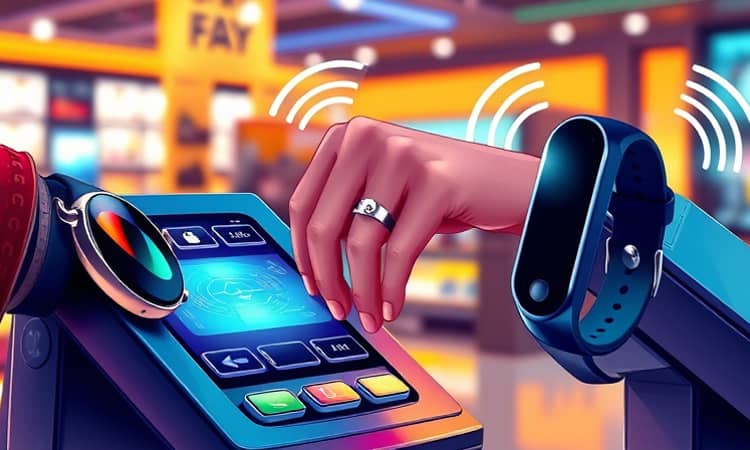
The world of payments is evolving at breakneck speed, and wearable devices are at the forefront of this revolution. From smartwatches on wrists to rings on fingers, a new era of seamless, fast, and invisible payments is upon us.
Market Size, Growth, and Big-Picture Numbers
The wearable payment devices market has surged in recent years, underpinned by consumer demand for convenience and hygiene. In 2024, it was valued at an impressive USD 57.98 billion in 2024, and forecasts point to rapid expansion.
Shipments of payment-enabled wearables continue to climb, with smartwatches and fitness bands leading the charge. Analysis suggests global delivery of these devices will exceed 570 million units by 2025.
Broader wearable device adoption is also skyrocketing, with the entire market projected from USD 153.81 billion in 2024 to USD 969.22 billion by 2035. This wearable devices boom that payment capabilities ride on underscores the immense opportunity for embedded transactions.
Key Growth Drivers
Several forces are propelling the wearable payments market forward:
- Contactless and cashless shift
- Technology advances
- Security and tokenization
- Lifestyle and health convergence
The dramatic pivot away from cash, accelerated by health concerns during the pandemic, drove 67% of retailers to accept tap-to-pay in 2020. Meanwhile, the miniaturization of electronics and NFC modules has enabled chip integration into rings, bands, and clothing.
Further, investment in tokenization programs in the financial sector and secure authentication measures has reduced fraud risk, making consumers more comfortable using a device strapped to their person. The result is a generation that expects seamless, fast, and “invisible” payments wherever they go.
Devices and Form Factors
Wearable payment solutions now span a remarkable range of styles and use cases.
- Smartwatches
- Fitness trackers and bands
- Smart rings
- Hybrid and luxury wearables
Smartwatches remain the largest category, accounting for over 52% of payment-enabled wearables in 2023. Brands like Apple, Samsung, and Garmin have established ecosystems for contactless transactions.
Fitness bands led 2025 unit share with 41.68%, converting health-focused users into daily tap-to-pay customers. Their popularity stems from comfortable wear and long battery life up to seven days.
Smart rings are the fastest-growing segment, forecast at 23.1% CAGR through 2031. These discreet devices appeal to fashion-conscious and professional users seeking convenience without bulk.
Hybrid watches and luxury smart jewelry recorded 32–35% year-over-year growth, particularly in Western Europe and the Middle East. Smart clothing, event wristbands, and workplace access badges are also emerging form factors.
Under-the-Hood Technologies
Multiple technologies power wearable payments, each suited to unique environments.
- NFC (Near Field Communication)
- RFID in closed-loop systems
- Bluetooth Low Energy connections
- Biometric authentication and AI
- Voice-enabled payments
NFC leads the pack with roughly 57–67% share, thanks to broad terminal support and EMV compliance. RFID holds 15% of revenue in transit passes and festival wristbands, while BLE enables device-to-hub communication for authentication and data sync.
Biometrics such as fingerprint, facial recognition, and heartbeat signature are expected to authenticate 68% of wearable transactions by 2025. AI-driven personalization tailors fraud alerts, spending limits, and loyalty rewards on the fly.
Voice assistants on wearables are also gaining traction, projected to grow 30% by 2025, linking payments to broader smart-home ecosystems.
User Adoption and Demographic Trends
Adoption rates are highest among health-conscious millennials and Gen Z consumers. Roughly 60% of 18–34 year-olds report using a wearable for contactless payments in major markets.
Emerging economies in Asia and Latin America are closing the gap, driven by mobile-first financial services and urban transit modernization. As smartphone penetration climbs, wearables become a natural extension of digital wallets.
Use Cases and Industry Applications
Wearable payments span numerous scenarios: quick-service restaurants, coffee shops, and convenience stores benefit from faster queues. Public transit systems integrate rings and bands as daily passes, reducing ticketing friction.
At festivals and sporting events, RFID-enabled wristbands offer preloaded cashless spending. On corporate campuses and hospital campuses, badges combine access control with cafeteria and vending payments.
Geographic Insights
North America leads adoption with advanced contactless infrastructure and high device ownership. In Europe, regulatory frameworks like PSD2 and strong NFC support drive growth, especially in Scandinavia and the U.K.
Asia-Pacific exhibits the fastest CAGR, fueled by China, India, and Southeast Asia. Mobile-first economies leapfrog traditional card rails, favoring tap-to-pay wearables alongside QR code wallets.
Latin America and the Middle East show niche uptake in urban centers, poised for expansion as terminal penetration improves.
Business Models and Ecosystem
Device makers partner with card networks and banks to offer preloaded payment credentials. Software platforms provide wallet apps, SDKs, and tokenization services for seamless integration.
Retailers invest in contactless terminals, loyalty program tie-ins, and data analytics to track usage patterns. Transit authorities adopt closed-loop systems that coexist with open-loop card acceptance.
Security, Regulation, and Compliance
EMV standards govern NFC security, while PSD2 in Europe and PCI DSS worldwide set compliance requirements for data protection. Tokenization and multi-factor authentication form the backbone of secure wearable transactions.
Privacy regulations such as GDPR and CCPA impose strict data handling rules. Cross-border deployments must navigate varying certification processes, making global rollouts complex but achievable.
Challenges and Barriers
Interoperability remains a challenge: fragmentation of wallet platforms and proprietary ecosystems slows universal adoption. Consumers voice concerns over data privacy and potential device vulnerabilities.
Merchant compatibility in developing regions is spotty, limiting contactless acceptance. Battery life constraints and the need for regular firmware updates pose additional hurdles.
Future Trends and Outlook
The next frontier includes smart clothing, accessories, and even subcutaneous chips with embedded payment credentials. Convergence with digital identity will enable unified authentication across services.
Integration with IoT devices and edge computing promises new use cases—from automated toll payments to hands-free retail experiences. Analysts foresee the wearable payments market exceeding USD 290.31 billion by 2034.
As infrastructure matures and ecosystems coalesce, transactions at your fingertips will soon be ubiquitous, blurting the lines between devices and daily life. Wearable payments are not just a novelty—they are the future of how the world transacts.