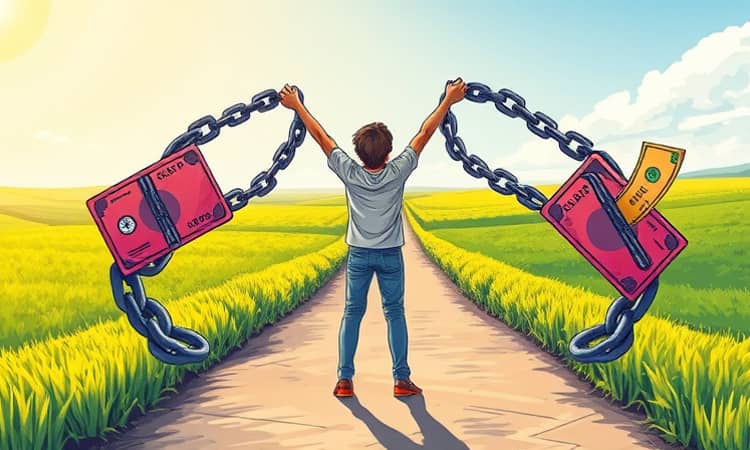
Debt can feel like an unbreakable chain holding you back from your dreams. In this guide, we explore a transformational process—financial freedom from oppressive debt—that not only eliminates balances but also reshapes your relationship with money.
Through a blend of mindset shifts, proven tactics, and legal options, you will discover how to reclaim your life, one payment at a time.
Understanding Debt Emancipation
We use "debt emancipation" as a metaphor, not a legal term. It means truly regaining control over one's future cash flow and choices by:
- Deliberately paying down or discharging balances.
- Restructuring remaining obligations so they no longer feel oppressive.
- Cementing habits that prevent relapse into unmanageable debt.
According to the Federal Reserve, U.S. household debt stands at $17.5 trillion, with credit card balances topping $930 billion at an average APR of 24.28%. Nearly 60% of Americans live paycheck-to-paycheck. These numbers show the weight of the shackles—and the size of the prize for those who break them.
Defining the Scope of Debt
Not all liabilities bind us equally. Emancipation efforts should focus on the most oppressive forms of debt:
- High-interest consumer balances: credit cards, store cards, BNPL plans
- Installment loans: auto, personal, medical payment plans
- Education loans: federal versus private student debt
- Other obligations: medical bills in collections, tax debts
Freedom can take different forms: mathematical payoff to zero, negotiated settlements, or strategic restructuring that delivers sustainable payments and predictable timelines.
Mindset Shifts: From Guilt to Agency
Debt often carries shame, but most financial products are designed to keep you revolving. Reframe your story:
Your unpaid balances are simply every dollar of interest is a piece of future income pledged to someone else. When you redirect that toward yourself, you become an investor in your own goals.
Emancipation rests on four behavioral pillars:
- Clarity: list each balance, interest rate (APR), minimum payment, status
- Intention: craft a written budget and clear payoff targets
- Automation: set up automatic payments and savings transfers
- Friction: freeze or lower card limits, adopt cash-only habits
Advanced Payoff Tactics and Tools
Once you have a budget and an emergency cushion, it’s time to apply methods that accelerate debt freedom.
Many advocates recommend a hybrid approach: pay off tiny nuisance balances for early victories, then switch to avalanche. Beyond those core methods, explore other tools to amplify results:
- Balance transfers to low- or 0-percent promo cards
- Biweekly or multiple payments each month
- Negotiating directly with creditors for reduced rates or settlements
- Debt consolidation loans that replace multiple debts with one payment
Each tactic carries unique risks and costs, so evaluate qualifications, fees, and timelines before committing.
Legal Options and Consumer Protections
When debts become truly unmanageable, legal relief can offer a path to start over. Chapter 7 bankruptcy discharges unsecured debts, while Chapter 13 reorganizes payments under court supervision. In 2022, roughly 700,000 Americans filed consumer bankruptcies, illustrating its role as a last-resort but powerful tool.
Be wary of scams and companies that promise instant forgiveness. Always verify credentials and read contracts thoroughly. When a debt is cancelled by a creditor or government agency, it may be reported as taxable income on IRS Form 1099-C, so plan for potential tax implications.
Finally, know your rights under the Fair Debt Collection Practices Act. Collectors cannot harass you or misrepresent amounts owed. If you suspect violations, file complaints with the CFPB or your state attorney general.
Building a Lifetime of Wealth
Debt emancipation is just the beginning. To stay free, cultivate habits that fortify your financial foundation:
- Maintain a growing emergency fund.
- Automate long-term savings and retirement contributions.
- Regularly review spending and adjust budgets.
- Set new goals: homeownership, entrepreneurship, early retirement.
By embedding these practices, you ensure that permanent behavioral and structural changes take root. Over time, your reclaimed cash flow becomes a powerful engine for building generational wealth.
Emancipating yourself from debt is both an emotional journey and a strategic battle. With clarity, consistent action, and the right toolkit, you can break free from the chains of high-interest balances and step confidently into a future defined by choice, security, and prosperity.