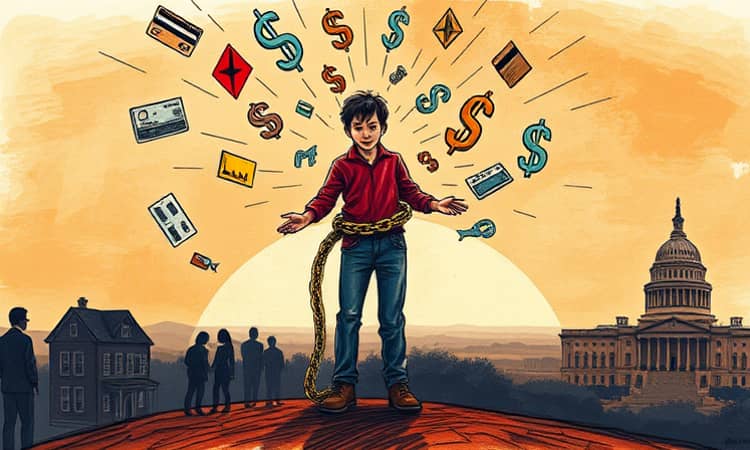
Debt touches more than your wallet; it seeps into your mind, body, relationships, and even the nation’s future. Unraveling these interwoven threads helps us understand how to break free and build resilience.
Immediate Financial Strain
At its core, rising debt levels impose chronic financial strain on households. When families juggle mortgage payments, credit card bills, auto loans, and student obligations, day-to-day budgets can collapse. U.S. national debt sits at 100% of GDP—around $38 trillion—translating to an average burden of $229,000 per household. Servicing this debt at current interest rates means roughly $7,700 per year in interest alone, or nearly 9% of the average $85,000 income.
Consumer debt categories dominate immediate pressures:
- Housing obligations driven by skyrocketing prices (75% cite this as their main driver).
- Healthcare expenses amplified by copays, rising insurance costs, and medical debt.
- Holiday and discretionary spending that often bleeds into the next calendar year.
Falling behind on payments triggers late fees, higher interest rates, and growing credit card balances. For up to 15 million Americans facing new Medicaid cuts and healthcare credit expirations, medical emergencies can instantly turn into financial crises.
Mental and Physical Health Tolls
The weight of debt rarely remains confined to bank statements. It carries a long-term health deterioration effect.
Research shows individuals with substantial balances report:
- 21% higher rates of depressive symptoms compared to those with minimal debt.
- 65% experiencing chronic anxiety over financial futures.
- Over 50% feeling persistent guilt or regret tied to their obligations.
According to Dr. Jane Houle, “Debt is a noxious, chronic stressor causing health problems over time.” These psychological burdens translate into physical impacts—higher blood pressure, compromised immune function, and lowered productivity at work. Many avoid seeking medical care when faced with anticipated copays or looming bills, which Gross of the Urban Health Institute notes leads Americans to delay or skip essential treatments.
Choices and Delayed Milestones
When mountains of student debt overshadow aspirations, life milestones shift indefinitely. Nearly one third of borrowers postpone buying a home, with Gen Z and Millennials most affected. Retirement accounts suffer, ending up 20–30% below optimal levels. Young adults often juggle loan payments against starting families, purchasing vehicles, or investing in their own businesses.
Fidelity’s research shows retirees over fifty hold 30% less in retirement savings if they carry education-related debt into later life. The result is a generation forced to make sacrifices—skipping vacations, delaying weddings, and choosing between debt repayment and health insurance coverage.
Expert Kathy Moore from Fidelity comments, “Borrowers regularly find themselves choosing between essential milestones and satisfying debt obligations. The emotional toll is immense.”
Household and National Scale Effects
Beyond individual and family struggles, debt imbalances cast a shadow on the broader economy. High household delinquencies reduce consumer spending, dampening retail and service sectors. Credit tightening can follow, making loans harder to obtain and slowing economic momentum.
On a national level, interest costs have climbed to over $1 trillion per year, accounting for 18% of federal revenue and ranking second only to Social Security in expenditure categories. Daily borrowing averages $7 billion, driving deficits toward $2 trillion. The Committee for a Responsible Federal Budget warns that without urgent deficit reduction, a nationwide fiscal crisis risk becomes all but certain, with possible inflation spikes, currency devaluation, or even default scenarios.
Looking Ahead: 2026 and Beyond
With the national debt projected to soar to 102.2% of GDP by late 2026, and interest costs set to triple within five years, policymakers and individuals face a pivotal moment. Fiscal policies—such as expired tax credits, healthcare funding cuts, and rising interest rates—will intensify household budget constraints.
Experts advise a multipronged approach:
- Strengthen emergency savings to cushion income shocks and medical emergencies.
- Prioritize high-interest debt repayment through consolidation or negotiated rates.
- Advocate for policy reforms—expanded healthcare coverage, targeted student loan relief, and balanced budgets.
While the national spotlight may focus on Washington debates, every household carries its own financial responsibility. Building a foundation of financial literacy, open communication about money within families, and seeking professional guidance can make a world of difference.
In this make-or-break year before key midterm elections, the collective choices we make—both personally and nationally—will determine whether we succumb to a cycle of indebtedness or emerge stronger. By understanding the interconnected web of debt impacts, we can take deliberate steps toward recovery and resilience.
Your journey begins today: assess your debts, craft a realistic repayment plan, lean on community resources, and keep an eye on policy developments that affect your bottom line. Together, these actions can transform the overwhelming weight of debt into a pathway toward lasting stability and freedom.