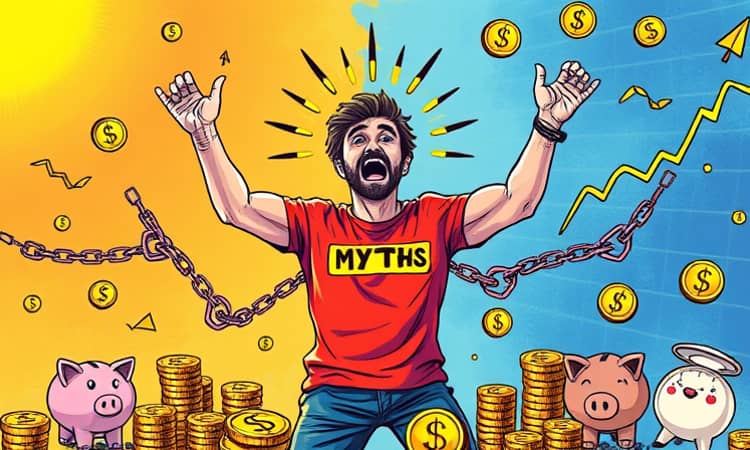
Money myths have long shaped our beliefs, driving stress, missteps, and lost opportunities. By dispelling these misconceptions, we can reclaim control and forge a path to genuine prosperity.
Why Financial Myths Matter
Many adults carry beliefs that hold them back: thinking that only the wealthy can invest or that credit cards inevitably damage your score. These myths contribute to billion-dollar productivity losses through financial stress and anxiety.
Over half of workers cite money worries as their top stressor, directly affecting their focus and well-being. When we challenge falsehoods, we unlock better decisions, reduce anxiety, and reclaim wasted potential.
Investment Myths
Myth: You need vast sums to begin. Reality: Modern platforms enable fractional shares and micro-investing, so you can start with as little as $20 monthly. With fractional shares, even a few dollars can buy partial ownership in major companies.
Myth: The stock market is pure gambling. Reality: Investing creates wealth as companies grow and distribute profits. When you buy shares, you become a stakeholder in real enterprises, not placing a bet on red or black.
Myth: It’s too risky for retirement money. Reality: Over decades, equity portfolios have outpaced inflation, making them essential for long-term growth. A well-diversified portfolio balances risk and return.
- Start small and increase contributions over time.
- Use low-cost index funds for broad market exposure.
- Rebalance annually to maintain your target allocation.
Credit & Debt Misconceptions
Myth: Credit cards always hurt your score. Reality: When used responsibly, cards can improve credit by building a history of on-time payments and low utilization. Aim to pay statements in full each month.
Myth: Carrying a balance boosts credit. Reality: Carrying a balance leads to high-interest charges without score benefits. Paying the full balance avoids interest entirely and demonstrates fiscal discipline.
Myth: All debt is bad. Reality: “Good debt,” such as mortgages and student loans, often enables wealth creation, while “bad debt,” like high-interest credit cards, erodes net worth.
- Pay more than the minimum due to reduce interest.
- Consolidate high-interest debt when rates are favorable.
- Maintain an emergency fund to avoid new debt.
Income & Success Myths
Myth: You need a six-figure salary to succeed. Reality: Financial success is built on habits—budgeting, saving consistently, and making informed choices. A modest income well-managed can outperform a large, unchecked paycheck.
Myth: Higher income guarantees higher wealth. Reality: Without disciplined savings and smart investments, extra earnings can disappear as fast as they arrive. Wealth is what you keep, not what you earn.
Myth: High tax brackets mean less take-home pay. Reality: The U.S. system is progressive—only income over each threshold faces higher rates. Strategic planning can minimize liabilities and maximize benefits.
Practical Financial Behaviors
Building strong financial habits is the antidote to myths. Small, consistent steps compound into significant results over time. Whether saving $5 a day or setting aside 1% of each paycheck, the key is persistence.
Budgeting is more than tracking; it’s a roadmap for values. When you assign every dollar a purpose—savings, essentials, or leisure—you gain clarity and control.
- Automate contributions to savings and investments.
- Review subscriptions quarterly to eliminate waste.
- Set clear short- and long-term financial goals.
Age-Specific Considerations
Early education transforms attitudes. Teaching children that money is earned, not free, and that patience yields better deals fosters lifelong discipline.
Adults benefit from ongoing learning. Just as fitness requires regular workouts, financial literacy is an ongoing pursuit. Seek workshops, credible blogs, or employer programs.
Major Life Decisions
Homeownership and renting each have merits. Myth: You must put 20% down. Reality: Lower down payments exist, though larger deposits may reduce monthly costs. Evaluate your goals, market conditions, and risk tolerance.
When making big choices—buying a car, funding education, or changing careers—separate emotion from fact. Research total costs, opportunity costs, and long-term implications before deciding.
Expert Perspectives
Financial leaders stress education as essential, not optional. Ana Mahony, CEO of Addition Wealth, labels workplace literacy programs as “not a ‘nice-to-have’, it is a ‘need-to-have.’”
Saira Malik, CIO of Nuveen, reminds us, “It’s not about how much money you have; it’s about how you make your money work for you.” Dwain Phelps of Phelps Financial Group warns that risk without strategy is a gamble, not an investment.
Foundation for Change
Debunking myths lays the groundwork for confident choices. By replacing false beliefs with evidence-based practices, you reduce stress, improve performance at work, and accelerate wealth building.
Start today: educate yourself, adopt one new habit, and question assumptions. Over time, these actions compound as powerfully as financial returns, unlocking a future defined by clarity, control, and genuine prosperity.