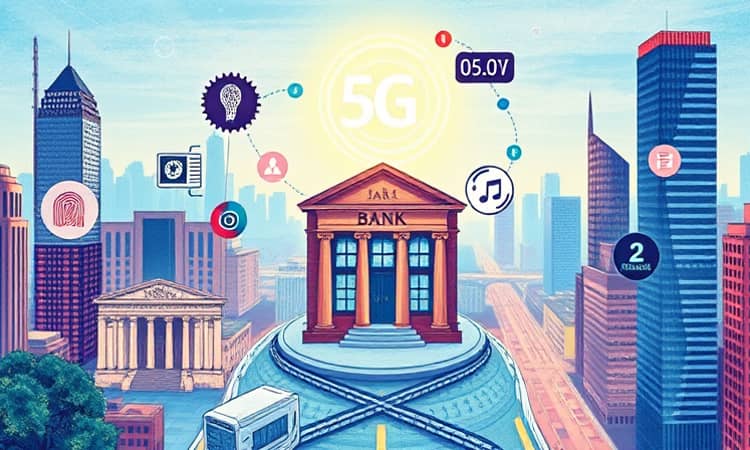
The rollout of fifth-generation networks marks a transformative era for banking and finance, promising to redefine speed, security, and customer engagement. As institutions embrace this shift, they stand at the threshold of ultra-low latency experiences in real time and unprecedented operational agility. This article explores how 5G will reshape the industry, drive productivity, and unlock new revenue streams while addressing critical challenges.
Technological Enablers
At its core, 5G delivers massive device connectivity advancements at scale by combining high bandwidth with sub-millisecond latency. This extraordinary performance supports a new class of applications that were impossible on legacy networks.
- Augmented reality branch services offering immersive customer journeys
- Video consultations with financial advisors in crystal-clear clarity
- Pop-up mobile branches that deploy on demand, anywhere
- Edge computing nodes processing sensitive data close to the source
These enablers form the backbone of tomorrow’s hyper-connected financial ecosystem, allowing institutions to respond to client needs with hyper-contextualized financial advice on demand and near-instant transactions.
Customer-Facing Transformations
5G catalyzes a profound shift in how customers interact with their financial providers. Gone are the days of static online banking portals; instead, consumers will enjoy truly seamless digital experiences across channels that blur the lines between physical and virtual services.
- Smartphones and wearables acting as portable point-of-sale terminals
- Touchless retail checkout powered by IoT and biometric sensors
- AI-driven robo-advisors delivering personalized investment guidance on mobile devices
- Gait analysis and facial recognition for secure, cardless ATM access
These innovations drive higher engagement, reduce friction, and foster loyalty by placing control directly in the hands of customers.
Operational Improvements and Industry Shifts
Behind the scenes, financial institutions are poised to achieve dramatic gains in speed and efficiency. With 5G-enabled networks, back-end processes that once took minutes can be completed in seconds, and high-value transactions like mortgage approvals can move forward without delay.
Simultaneously, the emergence of FinTech challengers and tech giants accelerates competition. Traditional banks must leverage 5G to maintain relevance, embracing digital-only branches and drone-based insurance inspections to meet evolving customer expectations.
Challenges and Risks
Despite the promise of 5G, institutions face substantial hurdles. The capital expenditure required for network upgrades and site densification can be prohibitive, and the rush to connect billions of IoT endpoints expands attack surfaces for cybercriminals.
- High rollout costs estimated at $2.7 trillion globally
- New IoT vulnerabilities requiring cutting-edge authentication frameworks for IoT security
- Potential underdelivery of promised speeds in early deployments
- Intensified competition from agile FinTech and big tech firms
Organizations must balance ambition with pragmatism, ensuring robust security architecture and clear return-on-investment models.
Strategic Recommendations
To capture the full value of 5G, financial leaders should:
- Invest in edge computing and AI integration to empower real-time decision making at every customer touchpoint
- Develop partnerships with telecom and technology firms for co-innovation hubs
- Prioritize use cases that deliver quick wins, such as biometric fraud prevention and pop-up mobile branches
- Create cross-functional teams to oversee security, compliance, and digital transformation initiatives
By focusing on measurable outcomes and iterative pilots, banks can refine their strategies and build sustainable competitive advantages.
Future Outlook
Looking ahead to 2026 and beyond, the convergence of 5G-Advanced, AI-driven networks, and pervasive IoT will further dissolve the boundaries between financial services and daily life. Customers will demand instantaneous, personalized experiences delivered wherever they are, and institutions that hesitate risk obsolescence.
Embracing this dynamic environment means reimagining branches as digital-first experience centers, continuously iterating on AI-powered advisory services, and fortifying infrastructures with dramatically lower fraud rates through advanced biometrics.
Ultimately, 5G offers not just faster connectivity but a profound opportunity to reinvent finance around human needs, forging deeper trust and unlocking possibilities previously confined to dreams.
As the network of the future takes shape, the time to act is now. Institutions that seize this moment will emerge as leaders in a world defined by speed, security, and limitless innovation.