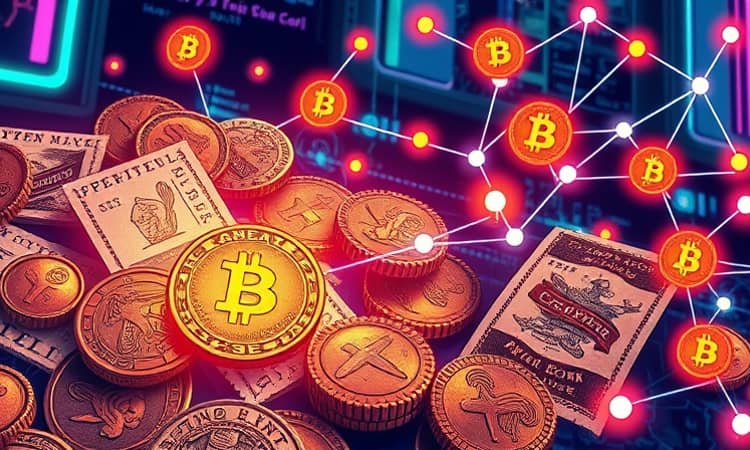
From humble copper tokens to blockchain tokens, loyalty programs have continually reinvented value exchange between brands and customers. This evolution reveals not only marketing ingenuity but a deeper transformation in how we perceive rewards and ownership.
Historical Roots: From Tokens to Coalition Stamps
In 1793, a merchant in Sudbury, New Hampshire, began issuing copper tokens to repeat customers—a simple system that sowed the seeds of what later became known as premium marketing. These tangible incentives encouraged shopkeepers to reward patronage and established a blueprint for modern loyalty.
By the mid-19th century, organizations such as the Great Atlantic & Pacific Tea Company distributed “checks” redeemable for luxury goods, while B.T. Babbitt’s profit-sharing plan granted customers a literal share in company success through premiums. These initiatives foreshadowed the idea of consumers as quasi-shareholders in brand prosperity.
In 1891, Schuster’s Department Store introduced stamps—one stamp per ten cents spent—requiring 500 stamps for a one-dollar reward, effectively yielding a 2% return on spend. Shortly after, Sperry & Hutchinson launched the first coalition loyalty program with S&H Green Stamps, allowing customers to redeem filled booklets for catalog merchandise purchased not from one retailer but across many.
Other pioneers included Grand Union’s Triple-S Blue Stamps, costing retailers roughly 1.25% of sales, and Larkin Company’s Club-of-Ten mail-order co-op that returned 20% of spend in certificate rewards. United Cigar Stores followed a coalition approach in 1901, embedding coupons from partners like Wrigley’s into product packaging.
Throughout the early 20th century, programs like Betty Crocker’s box-top redemption scheme reinforced the habit of collecting stamps. Households clipped coupons to mail away for cookbooks, cookware and textiles, enjoying peak engagement in the 1960s before digital methods eclipsed paper campaigns.
Economic Logic and Industry Scale
Loyalty schemes persist because they offer brands a structured way to reward repeat business, gather rich consumer data and monetize customer commitment as a strategic asset.
Historical benchmarks demonstrate consistent return-on-spend ratios:
- Schuster’s Stamps: 2% rebate on purchases
- Triple-S Blue Stamps: 1.25% of sales cost
- Larkin Certificates: 20% return for members
In the airline era, American Airlines’ 1981 AAdvantage program revolutionized rewards by issuing digital miles linked directly to flight activity. Within a few years, co-branded credit cards emerged, enabling airlines to sell miles to banks and generate substantial deferred revenue. Today, AAdvantage boasts over 50 million members and contributes billions in annual profit from point sales and breakage.
Major consulting reports position loyalty as a profit center, not just a cost. By segmenting customers and tailoring offers, companies can maximize consumer lifetime value, reduce churn and unlock ancillary revenue streams. Breakage—unredeemed points—provides industry-leading margins, akin to an issuer-controlled currency reserve.
As programs matured, brands recognized points function as a private issuer-controlled currency units, complete with balance-sheet treatment and financial instruments. Airlines have used loyalty balances as collateral for loans, underscoring the tangible economic value embedded in reward currency.
Technological Evolution: Data Infrastructure and Omnichannel
Technological advances have continually reshaped how loyalty is tracked, managed and personalized.
- Analog era: Tokens, stamps, box tops as tangible proof
- Digital card era: Magnetic-stripe and database-backed points
- Omnichannel era: Mobile apps, QR codes, web portals
In the 1980s and 1990s, frequent flyer programs digitalized miles accrual, moving away from paper coupons. Retailers adopted plastic loyalty cards, feeding transaction data into centralized databases. The 1995 launch of Tesco Clubcard represented the first retail-scale, data-driven, personalized reward strategies, as magnetic-stripe cards captured item-level purchase behavior for targeted voucher issuance.
With the rise of smartphones, loyalty moved into apps. Consumers could scan QR codes at point of sale, manage rewards online and receive push notifications for limited-time promotions. Brands invested in marketing automation and AI/ML systems to predict churn, optimize earn-and-burn rules and deliver one-to-one experiences at scale.
Points as Digital Assets: Tokenization, Trade and Regulation
As loyalty balances became intangible database entries, the natural next step is to treat them as digital assets—tokenized, programmable and tradable beyond the issuing brand’s ecosystem.
Tokenization leverages blockchain to convert loyalty points into cryptographic tokens, offering immutable ownership records and provenance and smart contract-driven reward engines. These tokens can reside in digital wallets, interact with DeFi protocols and travel across loyalty networks.
Key advantages of tokenized loyalty include:
- Real-time settlement and instant transfers
- Interoperability across partner and third-party networks
- Programmable features like expiry rules and rewards multipliers
- Enhanced security through decentralized consensus
Below is a comparative overview of loyalty across technological eras.
Regulatory frameworks will shape future adoption. Issuers may be required to register loyalty tokens as securities or e-money, maintain reserve backing and adhere to KYC/AML standards. Such measures build consumer trust and enable mainstream integration with payment rails and digital identity platforms.
Imagine a future where loyalty tokens function like currency: staked to earn yield, collateralized for micro-loans, or exchanged peer-to-peer in secondary marketplaces. Universal loyalty currencies could bridge industries—travel, retail, entertainment—allowing consumers to accumulate and redeem rewards across a vast ecosystem.
This paradigm shift positions loyalty programs at the intersection of marketing, finance and technology. Brands that embrace tokenization, interoperability and regulatory compliance will unlock emerging financial instruments in their customer engagement strategies.
By tracing the journey from copper tokens to blockchain tokens, we see loyalty programs not merely as incentive schemes but as evolving financial networks, poised to deliver unprecedented value to both consumers and enterprises in the digital age.