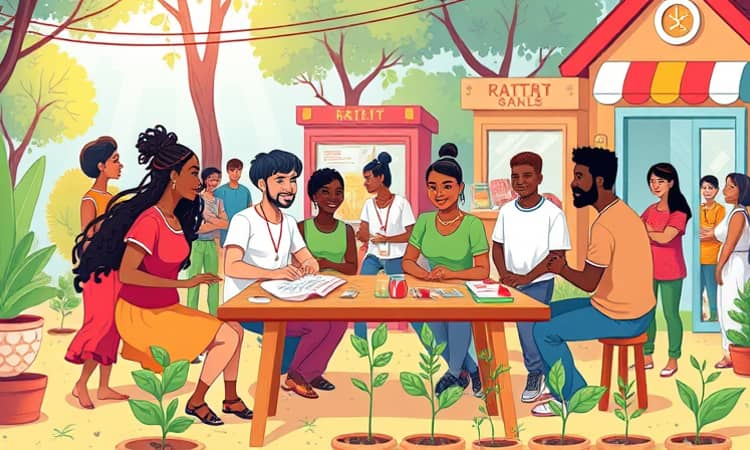
The journey to financial freedom begins with knowledge, opportunity, and the belief that each individual can shape their own destiny. Across the globe, economic empowerment transforms lives by providing not just resources, but the confidence to build better futures.
This handbook equips you with actionable insights, proven strategies, and inspirational examples to move from subsistence to sustainable growth. Whether you are a student, an entrepreneur, or a community leader, these chapters will guide you step by step toward ownership of finances, investments, property and lifelong stability.
Understanding Economic Empowerment
At its core, economic empowerment is the process of enabling individuals, especially those with limited means, to take control of their financial lives. It combines access to capital, decision-making authority, and skills development so that people can participate fully in economic growth.
This concept goes beyond mere survival. By fostering self-sufficiency, dignity, and grassroots leadership, it liberates communities from the cycle of poverty. Economic empowerment unites financial resources with social influence, ensuring that everyone has a stake in progress.
Building the Foundations: Education and Financial Literacy
Education is the bedrock of empowerment. A robust financial literacy curriculum in high schools prepares youth for real-world challenges, equipping them with budgeting, saving, and investing skills.
Recent surveys show overwhelming support: 83% of adults nationwide want mandatory personal finance courses, and 87% agree these concepts belong in every high school syllabus. This evidence underscores that access to judgment-free financial education is not a luxury—it’s a necessity.
- High school mandates: semester-long courses, standalone or embedded
- Lifelong learning: online modules, community workshops, mentorship
- Vocational training: real-world skills for digital, healthcare, and green jobs
By integrating lifelong learning opportunities, individuals develop the confidence to manage credit, plan retirement, and weather economic shocks.
Access to Financial Services and Entrepreneurship Support
Without affordable banking and credit, even the best ideas can falter. Microfinance initiatives and community savings groups bridge the gap, enabling small business starts and asset accumulation.
Mentorship networks and incubators provide budding entrepreneurs with the guidance needed to navigate regulations and scale operations. When combined with access to affordable banking services, these supports turn visions into thriving ventures.
Case studies from local cooperatives reveal how pooled community investments can fund everything from retail shops to real estate ownership, fostering resilient local economies.
Equity and Barrier Removal
True empowerment demands that we eliminate systemic barriers and discrimination. Women, minorities, and individuals in conflict-affected regions often face legal, cultural, and infrastructural obstacles that impede progress.
Programs like the Women’s Global Development and Prosperity (W-GDP) initiative focus on vocational training, entrepreneurship grants, and targeted research on gender-based violence. By addressing these challenges head-on, we create equitable opportunities for all social groups.
Efforts to reduce the cost of essentials—housing, food, energy—free up resources for savings and investment, leveling the playing field and advancing social justice.
Government Policy and Community-led Initiatives
Policy reforms are critical. Streamlined regulations, in-kind transfers, and infrastructure investments unlock economic potential on a broad scale. For example, reducing permit costs for small businesses can spur local innovation.
Simultaneously, community-driven funds and cooperatives harness local talents and networks. These collaborative efforts between diverse stakeholders yield customized solutions that resonate culturally and sustainably.
By combining top-down policy with grassroots leadership, communities shift from mere survival to lasting prosperity.
Measuring Impact and Looking Ahead
Data-driven evaluation allows us to track progress and refine strategies. With projections showing 73% of graduates covered by robust financial programs by 2031, the horizon looks bright.
Yet the work continues: closing remaining gaps, especially in underserved areas, demands ongoing commitment. By embracing equity, ownership, asset-building, and leadership, individuals and communities can write the next chapter in their own success story.
Take the first step today. Engage in local workshops, advocate for policy change, or start that small business you’ve always dreamed of. Your future is in your hands, and with these tools, you have the power to transform it.