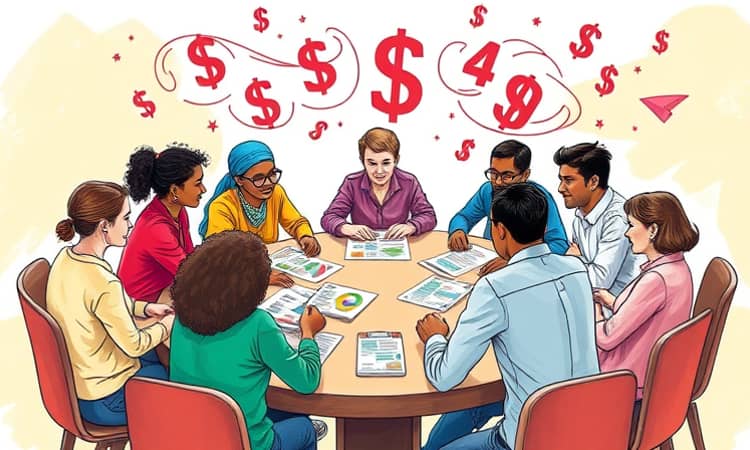
Global debt has surged to unprecedented heights, weighing on economies and individuals alike. As national budgets swell and households carry mounting obligations, the need for open, empathetic conversations about financial strain has never been clearer. In this article, we delve into the interconnected forces driving debt, the personal toll it takes, and practical strategies to reclaim control.
By examining both macroeconomic pressures and individual experiences, we aim to bridge the gap between daunting statistics and actionable hope. Through data-driven insights and human-centered advice, this debt dialogue seeks to inspire readers to take concrete steps toward long-term financial well-being.
Understanding Macro Pressures Fueling Debt
Global debt levels have eclipsed $346 trillion, nearing 310% of world GDP as of late 2025. Government borrowing in mature economies accounts for over $230 trillion, while emerging markets contribute an additional $115 trillion. This rapid accumulation stems from pandemic-era relief measures, persistent fiscal deficits, and elevated borrowing costs implemented by central banks to curb inflation.
Public debt alone crossed $100 trillion in 2024, representing over 92% of global GDP. If current trends persist, sovereign obligations could approach or exceed total world output by the end of the decade. Non-financial corporate debt is similarly high at nearly $100 trillion, while global household debt stands at $64 trillion.
High-interest rates, intended to cool overheated sectors, now strain government budgets and limit investment. The United States, for example, saw its national debt reach $38.56 trillion in early 2026, with publicly held obligations at $30.96 trillion. Projections indicate the U.S. debt-to-GDP ratio will climb from 100% to 120% by 2035, driven by recurring fiscal deficits averaging 5.6–6% of GDP.
Personal Burdens and Priorities
Behind these vast figures lie personal stories of stress and resilience. Recent surveys reveal that 88% of American adults report persistent financial stress as they enter 2026. Top concerns include high inflation (78%), rising living costs, and politics (55%). Nearly one-third (32%) expect their finances to worsen, the highest pessimism since 2018.
Despite these challenges, 92% of U.S. respondents set clear financial goals for 2026. Saving for emergencies tops the list at 77%, followed by debt reduction (33%), including credit cards and student loans. However, half of these individuals fear they will fail to meet their objectives due to unexpected expenses and stagnant incomes.
- Debt payoff as a primary goal: 40% prioritize credit card and loan reduction.
- Major obstacles: 50% cite cost-of-living increases, 41% face surprise costs.
- Age variation: Younger adults (18–49) express more optimism than older cohorts.
Generational differences surface in priorities and perceptions. Younger adults report a modest increase in positive financial outlooks—43% view their situation favorably, up from last year—while older groups face greater skepticism. Yet every age bracket recognizes debt repayment as an urgent focus, highlighting a universal desire to alleviate financial burdens.
The Emotional Toll and Practical Strategies
Debt's impact extends beyond numbers; it manifests as anxiety, strained relationships, and diminished well-being. Approximately 77% of adults experienced a financial setback in 2025, intensifying stress and eroding confidence. Persistent inflation—up 25% since 2020—stagnant wages, and looming recession fears further challenge resilience.
To break this cycle, individuals can adopt practical steps to regain control and foster stability. Financial professionals recommend a combination of assessment, planning, and community support:
- Conduct a full financial audit: track income, expenses, and outstanding balances.
- Prioritize high-interest debts: focus on credit cards or short-term loans first.
- Build an emergency fund: aim for three to six months of essential expenses.
Enlisting professional guidance—whether from a certified financial planner or CPA—can clarify complex tax, investment, and debt-management options. Group-centered approaches, such as support circles or peer-led workshops, help normalize experiences and share proven tactics.
Balancing Optimism with Reality
Despite mounting pressures, a sense of cautious optimism persists. Surveys indicate that 76% of Americans believe their personal finances will improve in 2026, even as 51% expect consumer prices to worsen. Risk-taking behaviors, including cryptocurrency investments (20%) and new business ventures (18%), reveal a willingness to pursue opportunities alongside prudent planning.
This optimism coexists with genuine concerns about a potential recession (62%) and global trade tensions (67%). As markets adjust to slower growth—projected at 2.7% worldwide for 2026—borrowers and investors alike must navigate shifting conditions with flexibility.
This snapshot underscores the contrast between aspirational goals and the uncertainty that accompanies them. By acknowledging both perspectives, readers can craft strategies that balance ambition with realistic timelines.
Navigating a Path Forward
Looking ahead, individuals and policymakers share responsibility for crafting sustainable solutions. On the governmental level, gradual rate reductions and targeted fiscal measures could ease the cost of servicing sovereign debt, while investment in growth-driving sectors—clean energy, infrastructure, education—lays the groundwork for higher future revenues.
At the household level, adopting a balanced and sustainable approach will be key. Strategies include setting modest, measurable goals; automating savings and payments; and regularly reviewing budgets against changing circumstances. By creating a feedback loop of assessment, adjustment, and reinvestment, families can steadily improve their financial resilience.
Community-based financial literacy initiatives offer another avenue for empowerment. Workshops on budgeting, tax optimization, and responsible credit use can demystify complex topics and foster a culture of mutual support. Employers and schools can partner with nonprofits to bring these resources to wider audiences.
Ultimately, the debt dialogue is not about assigning blame but about forging collective solutions. As individuals share experiences, data becomes humanized, and strategies evolve from abstract frameworks into real-world lifelines. Through solidarity and action, we can confront financial challenges with compassion and clarity—transforming the weight of debt into an opportunity for growth.
By integrating macro insights with personal narratives and practical guidance, this conversation on debt transcends mere statistics. It becomes a call to action: to speak openly, plan strategically, and support one another on the journey toward financial empowerment.