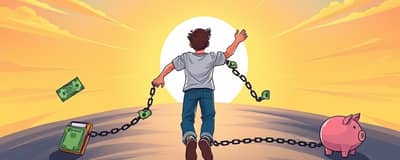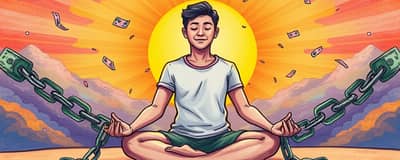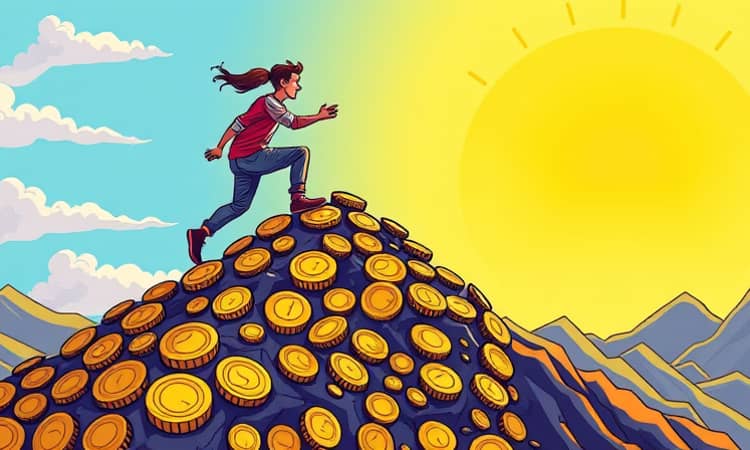
For 42.8 million Americans, student loan debt is a shadow that lingers long after graduation, shaping lives and delaying dreams.
The choice to delay repayment might seem like a safe harbor, but it often leads to a storm of compounding interest and mounting stress.
Early action, however, lights the path to financial freedom and mental clarity, transforming burden into opportunity.
This article explores why proactive repayment isn't just wise—it's essential for reclaiming your future.
The Crushing Weight of Student Debt
Student loan debt has surged to become the third-largest household debt category in the United States.
From 2004 to 2023, it grew over 500%, faster than all other forms of household debt.
The scale is staggering, with millions grappling under its weight.
Consider these key statistics that highlight the crisis:
- 70% of college graduates start careers with an average debt of $37,175.
- Ages 25-34 owe a total of $479.9 billion, averaging $33,559 per borrower.
- Ages 35-49 owe $489.4 billion, with an average of $48,941 each.
- 21.4% of families carried student debt as of 2019.
This reality underscores why inaction is a luxury few can afford.
The Cost of Delay
Delaying repayment offers temporary relief but exacts a heavy long-term toll.
Interest accumulates relentlessly, turning manageable balances into financial anchors.
Post-payment pause, risks have intensified dramatically.
By April 2024, 30% of borrowers missed payments, mirroring pre-pause delinquency rates.
In high-poverty areas, borrowers are 27% more likely to miss payments.
Those with $0 payments under income-driven plans face a 33% higher delinquency risk.
Moreover, missers face a 5x collections risk compared to consistent payers.
Delay isn't just costly; it's a dangerous gamble with your financial health.
Why Early Action Pays Off
Paying off student loans early transforms the debt dilemma into a powerful advantage.
The benefits are profound, touching every aspect of your life.
Beyond the table, early payoff offers no prepayment fees on federal loans, a critical perk.
It frees up cash for life goals, from vacations to investments, enhancing your quality of life.
By acting now, you break free from the shackles of perpetual debt and embrace control.
The Other Side of the Coin
Early repayment has drawbacks, and acknowledging them adds nuance to the dilemma.
Key challenges include:
- Larger monthly payments, which can strain early-career budgets.
- Loss of up to $2,500 in annual student loan interest tax deductions.
- Risk of delaying an emergency fund, crucial for financial safety.
However, these are manageable with careful planning and prioritization.
For instance, building a $1,000 emergency fund first can mitigate unforeseen risks.
The trade-offs pale in comparison to the long-term gains of early action.
Navigating the Post-Pause Landscape
The end of the payment pause in September 2023 brought 28 million borrowers back to repayment at once.
An on-ramp period helped 8.9 million avoid immediate delinquency reporting.
Yet, 20% of borrowers now have $0 payments due to income-driven plans, double the pre-pause rate.
Despite this, 47% of new-to-repayment borrowers are not actively paying.
This environment makes early action more critical than ever to avoid delinquency spikes.
Proactive steps can safeguard your financial future and prevent long-term damage.
Leveraging Employer Assistance
Modern solutions are emerging through employer assistance programs, offering a lifeline for early payoff.
In 2022, 13% of organizations offered student loan help, up from 4% in 2016/2017.
Key features include:
- Employer payments of $100-$200 per month.
- Tax-free contributions up to $5,250 per year under SECURE 2.0.
- Some government programs offer up to $10,000 per year, maxing at $60,000.
These programs are particularly valuable in high-debt fields like legal and healthcare.
81% of employers say it aids recruitment, and 86% of employees stay longer with such benefits.
By tapping into these resources, you can accelerate payoff without sacrificing income.
Your Blueprint for Early Payoff
Taking action requires a strategic and consistent approach.
Start with these practical steps to chip away at your debt:
- Pay more than the minimum monthly payment whenever possible.
- Switch to a shorter repayment plan to reduce the term and interest.
- Make bi-weekly payments, resulting in 13 full payments per year.
- Apply tax refunds or windfalls directly to your loan balance.
- Consider refinancing for lower interest rates, especially with good credit.
- Utilize employer perks and tuition reimbursement programs.
Each step saves you thousands in interest and brings you closer to freedom.
Tools like student loan calculators can model your savings, making the benefits tangible and motivating.
Remember, consistency is key; small efforts compound over time into significant gains.
By adopting these strategies, you turn the dilemma into a decisive victory over debt.
Student loan debt doesn't have to define your future or limit your aspirations.
Early action empowers you to reclaim control, reduce stress, and unlock a world of opportunities.
The path to financial freedom starts with a single payment made sooner rather than later.
Embrace the payoff, and watch your dreams take flight without the weight of debt holding you back.