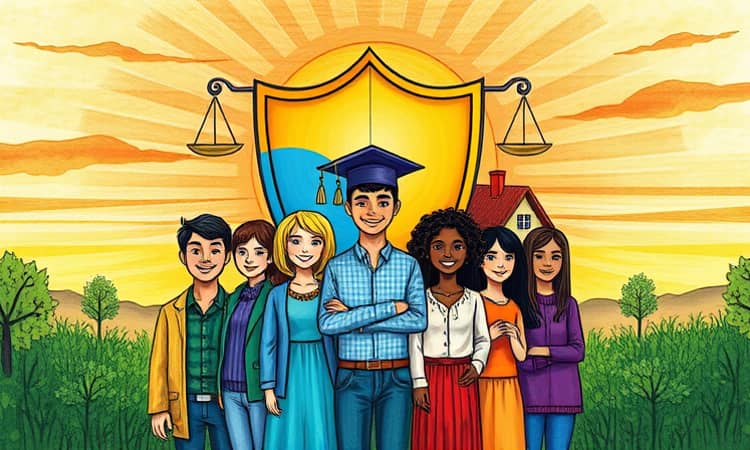
Every year, millions of Americans face mounting debt burdens that threaten their dreams of education, entrepreneurship, and homeownership. The Borrowing Bill of Rights offers a blueprint to ensure every borrower encounters clear information, fair treatment, and accountability from lenders and servicers. By weaving together state and advocacy models, this framework can reshape the financial landscape into one of empowerment and trust.
Understanding the Borrowing Bill of Rights
At its core, the Borrowing Bill of Rights is a set of principles designed to protect consumers in the student loan, small business, and mortgage markets. Emerging from state statutes and nonprofit coalitions, it addresses long-standing issues like hidden fees, misapplied payments, and confusing terms that trap borrowers in debt cycles.
These protections rest on four pillars: transparent pricing and terms, non-abusive lending products and practices, responsible underwriting processes, and fair servicing standards. Together, they establish a baseline of ethical behavior for financial institutions and third-party servicers.
Existing Frameworks and State Models
Over the past decade, several states have enacted student loan borrower bills of rights, while the Aspen Institute and RBL Coalition have crafted a small business borrower model. California’s Homeowner Bill of Rights further extends protections into the mortgage arena, creating a patchwork of laws that inspire a unified national approach.
These frameworks assign clear duties to servicers, mandate licensing, prohibit abusive practices, and establish ombudsmen or advocates to resolve borrower complaints. Collectively, they demonstrate what is possible when transparency and accountability guide loan markets.
Below is a comparison of key state and advocacy models:
Eight Fundamental Rights for Borrowers
Drawing from student, small business, and homeowner models, a unified Borrowing Bill of Rights should guarantee these eight protections:
- Transparent pricing and terms: Plain-language disclosures of interest rates, fees, and total costs.
- Non-abusive lending products and practices: No debt stacking, hidden charges, or high-pressure sales tactics.
- Responsible underwriting processes: Affordability assessments to match loans to borrower capacity.
- Fair servicing standards: Timely responses, accurate payment applications, pre-default plan evaluations.
- Fair broker treatment and disclosures: Full education on options before agreement signing.
- Equitable debt collection practices: Respectful, lawful outreach with clear statements of debt.
- Inclusive access to credit opportunities: Equal treatment regardless of background.
- Access to detailed loan assistance: Historical account reviews, repayment and forgiveness guidance.
Roles and Duties of Ombudsmen and Advocates
Central to effective enforcement is a dedicated ombudsman or advocate office. These roles serve as a lifeline for borrowers who encounter miscommunication, billing errors, or unfair denials of relief.
Their core duties include:
- Receiving, reviewing, and resolving borrower complaints.
- Educating borrowers and servicers on rights and obligations.
- Publishing regular reports on market practices and borrower outcomes.
- Recommending legislative and policy improvements to regulators.
- Monitoring compliance with licensing and servicing standards.
Licensing, Enforcement, and Penalties
Robust enforcement begins with mandatory licensing for non-bank servicers. Under many proposals, applicants must maintain a minimum net worth, post surety bonds scaled to loan volume, and submit to regular financial examinations.
Enforcement mechanisms include:
- Commissioner investigations with access to records and personnel interviews.
- Prohibitions on fraudulent or misleading practices, such as misapplying payments.
- Civil penalties up to $25,000 per violation, restitution orders, and injunctions.
- Private right of action, allowing borrowers to sue for damages and recover attorney fees.
- Annual market data reporting on loan volumes, default rates, and borrower demographics.
Broader Impacts and Policy Recommendations
Student debt impedes homeownership, delays business formation, and widens wealth gaps. Predatory small-business lending stifles economic growth in underserved communities. Mortgage servicing abuses can uproot families from their homes and savings.
By adopting a unified Borrowing Bill of Rights, policymakers can reverse these trends. Essential policy recommendations include expanding ombudsman offices, enshrining private enforcement rights, and extending protections to personal and commercial loans beyond current student and homeowner laws.
Building a Unified Safe Loan Advocacy Movement
Creating lasting change requires collaboration. Nonprofits, consumer advocates, state regulators, and responsible lenders must unite around a shared vision of transparency and accountability. Public awareness campaigns and borrower education drive demand for better practices, while a clear legislative framework empowers enforcement.
This movement is more than policy—it is a promise that every borrower deserves dignity, clarity, and a fair chance to succeed. By championing the Borrowing Bill of Rights, we can transform our lending system into one that uplifts communities, fuels innovation, and restores trust in the American dream.