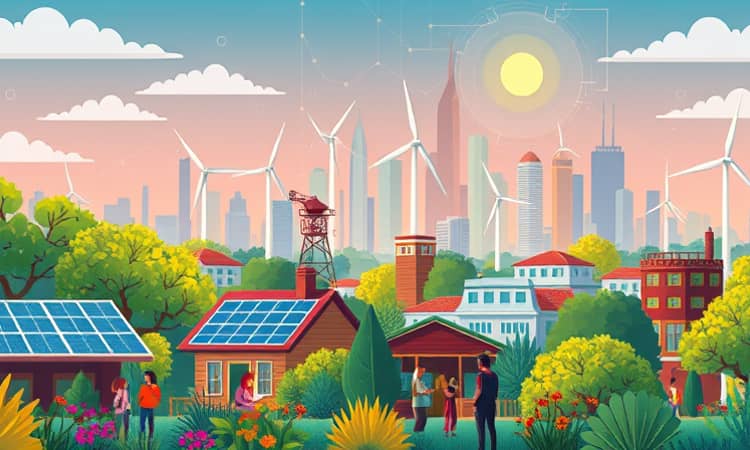
As climate challenges intensify, a new wave of financial innovation is emerging. Green FinTech blends technology and sustainability to drive meaningful change.
By harnessing digital tools and data, businesses and individuals can now mobilize capital for eco-friendly projects with unprecedented speed and transparency.
The Rise of Green FinTech
Green FinTech represents the fusion of traditional banking, investment platforms, and cutting-edge technology to support environmental goals. It leverages AI, blockchain, and analytics to power everything from green bonds to carbon trading.
At its core, this movement demonstrates that financial technology with environmental sustainability is not only possible but profitable, creating new opportunities for investors and society alike.
Market Landscape and Growth Projections
The green finance ecosystem is expanding rapidly across regions. Projections show the global Green Finance Market soaring to $28.71 trillion by 2033, while specialized Green FinTech Innovation platforms are set to reach $12.5 billion.
Regional dynamics further illustrate this momentum:
- North America: Dominant with a $6.0 billion market share in green innovation in 2025.
- Europe: Leading climate FinTech funding at $1.4 billion, driven by infrastructure and regulatory support.
- Asia Pacific, LATAM, MEA: Emerging segments with targeted green investment initiatives.
Core Technologies Driving Change
Underpinning Green FinTech are transformative technologies that enable real-time insights and seamless transactions.
- AI and Data Analytics: Deliver real-time carbon tracking insights and predictive modeling to optimize energy use.
- Blockchain Transparency: Immutable ledgers for carbon credits, supply chain traceability, and DeFi funding.
- Embedded Features: Intuitive dashboards for eco-budgeting, spending impact, and supplier incentives.
- Operational Efficiency: Renewable hosting and optimized code reduce digital emissions up to 20%.
These innovations provide transparent, data-backed sustainability solutions that enhance compliance with regulations like the EU’s CSRD and build stakeholder trust.
Real-World Success Stories
Several pioneers illustrate how Green FinTech can deliver both profit and impact:
Trine enables investors to participate in crowdfunding solar energy in emerging markets, bringing clean power to underserved communities.
Aspiration offers fossil-fuel-free banking services, empowering consumers to align spending with values.
Satchel sets a new standard for transparent ESG operations, providing sustainability-linked loans with performance incentives.
Benefits and Business Impacts
Adopting Green FinTech delivers a range of strategic advantages:
- Enhanced profitability through cost savings and performance-based financing.
- Increased resilience by meeting evolving regulatory and investor demands.
- Stronger reputation and customer loyalty among purpose-driven audiences.
- Competitive differentiation as a sustainable industry leader.
These outcomes prove that environmental responsibility can drive growth, not hinder it.
Overcoming Challenges and Charting the Future
Despite clear benefits, organizations face hurdles such as data standardization, stakeholder alignment, and regulatory complexity.
To navigate these challenges, companies should:
• Conduct a baseline emissions audit to identify priority areas.
• Establish clear ESG goals and integrate them into core strategies.
• Partner with specialized Green FinTech providers for tailored solutions.
By following these steps, businesses can achieve profit and planet convergence and secure long-term resilient sustainable success.
A Blueprint for Adoption
Successful implementation of Green FinTech requires a structured approach. Begin by assembling a cross-functional team that includes finance, sustainability, and IT experts.
Next, evaluate existing processes to pinpoint friction points and opportunities for digital integration.
Develop a phased rollout plan that starts with pilot projects—such as blockchain carbon credit pilots or AI-driven ESG scoring—to build internal capabilities and demonstrate value.
Finally, scale proven solutions across the organization and continuously monitor performance with real-time dashboards to ensure targets are met.
The Horizon Ahead
Looking forward, Green FinTech will play a pivotal role in shaping a sustainable economy. Advances in AI, regulatory momentum, and increasing climate finance will fuel further innovation.
As capital flows toward environmental solutions and digital tools mature, we will witness unprecedented synergy between technology and ecology.
Embracing these trends today positions organizations to thrive in tomorrow’s low-carbon world. It’s time to harness the power of Green FinTech and become architects of a better future.