In today’s cashless digital payment world, children often view credit cards as magic piece of plastic that grants instant access to goods. Without guidance, they may learn financial lessons through hard experience with debt rather than thoughtful parenting. By parenting with plastic, families can transform everyday card swipes into powerful learning moments that shape a child’s financial habits for life.
From elementary school through high school, deliberate conversations and hands-on activities help youngsters understand that using a credit card comes with responsibility—and consequences. This guide offers a comprehensive roadmap, from core definitions to age-specific strategies, arming parents with practical tools to teach their children about credit.
Why This Topic Matters
Only small minority of U.S. schools require standalone personal finance courses, leaving most families solely responsible for money education. Northwestern Mutual reports that just seven states mandate financial literacy for graduation, creating a gap that parents must fill.
According to the FDIC, lower debt and higher savings later in life result from early money lessons. With teenagers facing a world of tap-to-pay, mobile wallets, and subscription models, they may never handle physical cash—and thus never connect a card swipe to real dollars until it’s too late.
Core Concepts Kids Need to Understand
Before handing over a card, children need a clear framework of how plastic payments work—and why they’re not limitless.
Credit Card vs. Debit Card
- Money comes directly from bank account when using a debit card; overspending risks overdraft fees.
- Borrowing someone else’s money defines a credit card purchase, requiring timely repayment to avoid interest.
- Debit spending is capped by your balance; credit cards impose a credit limit set by issuer.
Emphasize that a debit swipe reduces existing funds, while a credit swipe creates a balance owed to the bank.
How Credit Cards Actually Work
For younger children, explain that the card company pays the store on your behalf, and at month’s end you receive a bill. When you pay that bill, you settle what you owe. Missing payments triggers late fees, interest charges, and potential harm to your credit record.
With teens, introduce statement components line by line:
- Balance and minimum payment
- Due date and payment schedules
- Interest rate (APR) and how it accrues
- Credit limit and utilization impact
Interest, Compounding, and the Cost of Debt
Pay for the privilege of borrowing by making timely payments. Otherwise, unpaid balances accrue interest each day. A real-world example illustrates the stakes: a $1,000 phone at 18% APR with a $25 minimum payment can take over five years to clear and cost roughly $540 in interest.
Show children how carrying a balance magnifies the total cost of purchases compared with saving and paying in cash. This contrast lays the groundwork for disciplined credit use and informed decision-making.
Credit Scores and Their Impact
Compare credit scores to school grades: both reflect responsibility and open doors to better opportunities. Teach your teen that a strong score helps secure favorable rates on car loans, apartment rentals, phone contracts, and even influences some job applications.
- Payment history: paying bills on time
- Balance well below credit limit to maintain low utilization
- Length of credit history and consistent use
Elementary School (Ages 5–11)
At this stage, children learn that spending reduces a family’s resources and that plastic is not magic. Model basic budgeting for family expenses—groceries, mortgage, and utilities—highlighting trade-offs. Tie lessons to kid-related costs like sports fees or holiday gifts to show that every swipe has a real impact.
Introduce simple games or apps—Bankaroo or Animal Crossing—that simulate earning, saving, and spending. Host a weekly home marketplace where kids use pretend money to buy small items with earned allowance points. These activities foster early recognition of needs versus wants and reinforce that every card swipe equals real money leaving somewhere.
Middle School (Ages 11–14)
Preteens benefit from hands-on financial tools. Consider a youth checking account with a linked debit card. Parents and children can monitor balances together, set spending limits, and transfer funds, teaching youngsters that they can only spend what they deposit.
Role-play a parent-run bank: offer small loans for bigger purchases, but charge a modest interest rate. Compare two scenarios: immediate purchase with interest versus saving up to buy at base price. Crunching these numbers builds concrete understanding of how borrowing works and why waiting can save money.
High School (Ages 14–18)
As teens near adulthood, equip them for independent financial life. A teen checking account with direct deposit and online bill pay can form foundational banking skills. Discuss mobile wallet security and recurring subscription management so they don’t accidentally overspend.
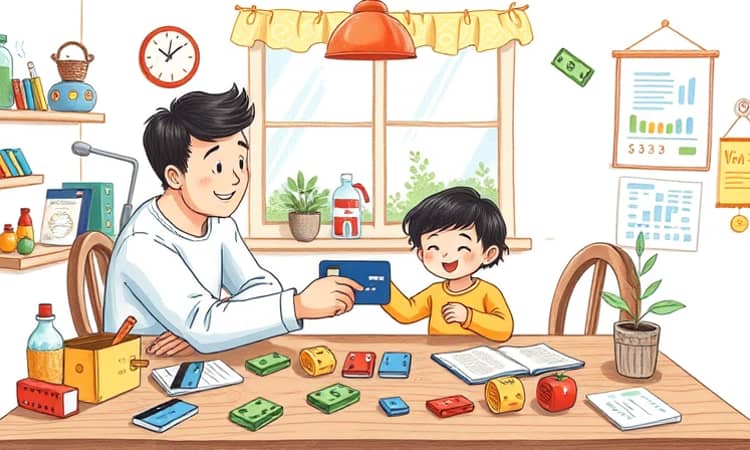
Adding a teen as an authorized user on a parent’s credit card can begin building their credit history. Keep the added card’s limit low, set clear usage rules—gas and essentials only—and review statements together each month. This practice reinforces accountability and offers real-time lessons in tracking debt and payments.
Conclusion
By embracing credit cards as teaching tools, parents turn routine transactions into financial literacy lessons. Start early, model responsible use, and build age-appropriate experiences from elementary allowance markets to high school credit history. With intentional guidance, children can grow into adults who use plastic confidently and wisely, securing long-term financial independence and money mastery.