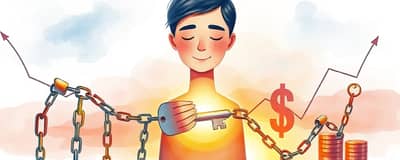
Imagine waking up each day with invisible chains of debt wrapped around your dreams, silently dictating your choices and future.
Only 11% of Americans feel they are living their definition of financial freedom, a stark statistic that reveals the pervasive grip of debt.
High levels of household debt have surged in recent decades, creating a crisis that extends beyond numbers into real human suffering.
This article explores how debt acts as a barrier to economic mobility, health, and happiness, offering insights and solutions for breaking free.
The Overwhelming Scale of Modern Debt
Household debt in the United States has doubled from $8 trillion in 2004 to $15 trillion in 2021, outpacing inflation significantly.
This growth represents real burdens on individuals and families, with credit card debt alone reaching a record $1.031 trillion.
Student loans have exceeded $1 trillion, with graduates averaging $32,000 in debt, delaying major life milestones.
Mortgages show that 22% of homes were underwater post-2008, trapping homeowners in unfavorable locations.
These figures highlight how debt infiltrates every aspect of life, from education to retirement.
How Debt Restricts Economic Freedom
Debt acts as a formidable barrier to economic prosperity and future planning, limiting choices in profound ways.
It restricts job mobility, as underwater mortgages prevent relocation for better opportunities.
Major purchases like homes and cars are delayed, especially for younger generations burdened by student debt.
Disposable income is reduced, hindering personal wealth-building and essential consumer spending.
- Debt creates cycles where high-interest fees compound, making payoff increasingly difficult.
- It reduces the ability to invest in education or start businesses, stifling innovation.
- Economic freedom is compromised, leading to postponed dreams and abandoned goals.
This reduced economic freedom means that financial stability remains elusive for many.
The Heavy Toll on Health and Well-being
Unsecured debt is a significant risk factor for poor health, operating through chronic stress and altered behaviors.
Mental health effects include depression, anxiety, and poor psychological well-being, with a dose-response relationship.
Physical health suffers, leading to conditions like high blood pressure, obesity, and lower life expectancy.
Behaviors change, with people skipping medical care, food, or utilities to manage debt burdens.
- Specific groups, such as those with child support or legal fines, face increased homelessness and mental issues.
- Debt relief has shown promising results; charity payoffs reduced anxiety by 11% and boosted hope by 10%.
- Student loan cancellation improved health and well-being, highlighting the power of intervention.
As studies note, borrowers describe intense personal failure and shame from debt, exacerbating psychological distress.
Case Studies: Real Lives Bound by Debt
Consider a recent graduate with $32,000 in student loans, delaying marriage and homeownership due to financial strain.
Underwater homeowners are trapped in declining neighborhoods, unable to move for better job opportunities.
Low-income families, especially women and people of color, bear the brunt of child support and legal debts.
- Student debt impacts sleep quality and parents' health, creating intergenerational stress.
- Credit card debt traps individuals in cycles of minimum payments and growing balances.
- These examples show how debt chains individuals to circumstances, limiting their potential for growth.
Each story underscores the urgent need for debt management and relief strategies.
Broader Societal and Economic Impacts
Debt doesn't just affect individuals; it ripples through the entire economy, straining national GDP.
It diverts spending from goods and services, raising lending costs and increasing defaults.
During the pandemic, less-educated individuals were hit harder, linking debt to higher mortality and opioid crises.
Public debt threatens future economic freedom, with political polarization eroding civil liberties over time.
- Neoliberal policies since the 1970s have pushed low-wage earners into debt for basics, amid stagnant wages.
- Debt exacerbates inequality, marginalizing vulnerable populations and reducing social mobility.
- Addressing debt is crucial for societal ripple effects and long-term economic stability.
This interconnectedness means that personal debt challenges have collective consequences.
Finding Freedom: Solutions and Relief
While debt can enable goals like homeownership, unmanageable debt requires proactive intervention and support.
On a personal level, strategies include budgeting, debt consolidation, and seeking financial counseling.
Policy solutions are essential, such as student loan forgiveness, which has evidence of improving health outcomes.
- Debt relief programs can break cycles, offering a path to economic mobility and hope for many.
- Educational initiatives on financial literacy empower individuals to make informed decisions.
- Community support networks provide emotional and practical assistance during debt crises.
It's vital to reduce the psychological shame associated with debt, viewing it as a systemic issue.
Breaking Free from the Invisible Chains
The journey to financial freedom begins with awareness, action, and a commitment to change.
By managing debt proactively and advocating for supportive policies, individuals can loosen these chains.
Remember, debt is not a moral failing but a challenge that can be overcome with resilience.
Embrace personal control and community resilience to build a future unbound by financial constraints.
With determination and the right tools, it's possible to transform debt from a burden into a stepping stone.
Start today by assessing your debt, setting goals, and seeking help when needed.
Together, we can break free and reclaim the freedom that debt has long constrained.