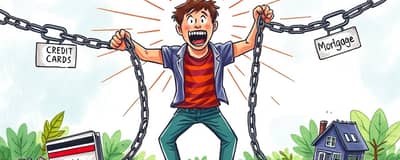
In a world where financial stress can derail productivity and happiness, the concept of a flow state offers a transformative lens for managing debt. By combining psychological principles with practical budgeting tactics, you can cultivate a state where debt repayment feels focused, efficient, and even inspiring.
This article explores how to achieve a deeply satisfying psychological state in your finances, guiding you through debt assessment, repayment strategies, budgeting frameworks, and motivational techniques.
Understanding Flow and Financial Flow
Flow state, coined by psychologist Mihaly Csikszentmihalyi, describes a period of total immersion in an activity. In this condition, time seems to disappear as clarity, creativity, and concentration surge. Translating this into financial life means aligning your debt management tasks with the same intense focus and enjoyment.
Financial flow refers to two distinct but related concepts: cash flow and fund flow. A cash flow statement reveals actual inflows and outflows of cash within a specific period, while a fund flow statement tracks changes in financial position between balance sheets. By mastering both, you gain control over your income, expenses, savings, and investments.
When you harness a increase levels of creativity and concentration toward budgeting, each payment becomes a deliberate action rather than a chore.
Assessing Your Debt Situation
The first step to effortless debt management is understanding what you owe. List every debt account, note the outstanding balance, interest rate, and minimum payment. This foundation allows for strategic planning and prioritization.
- List all debts: credit cards, loans, lines of credit
- Record interest rates and due dates
- Calculate total monthly minimum payments
- Identify any variable-rate loans or upcoming rate changes
Visualize these numbers to turn abstract figures into tangible goals. A clear snapshot empowers you to make informed choices rather than reactive decisions.
Core Debt Repayment Strategies
With a precise map of your debts, you can select strategies that resonate with your personality and goals. Below are six proven approaches to accelerate debt payoff.
- Pay more than minimum: Contribute extra to reduce principal faster and save on interest.
- Avalanche method: Target highest-interest debts first to minimize total interest paid.
- Snowball method: Focus on smallest balances to build momentum through quick wins.
- Zero-based budgeting: Assign every dollar a purpose to eliminate wasteful spending.
- Debt consolidation: Combine multiple debts into one low-interest loan for simplicity.
- Balance transfer cards: Leverage 0% introductory offers for interest-free repayment periods.
You can choose a single method or blend elements from several, but consistency and commitment are crucial.
Avalanche Method: Interest-Focused Repayment
The avalanche approach prioritizes debts with the highest interest rates. This is a mathematically efficient strategy that saves you money over the long run.
- Rank debts by interest rate, highest to lowest
- Make minimum payments on all accounts to stay current
- Direct any extra funds to the top-interest debt
- Repeat until each loan or card is fully paid
- Roll payments into the next highest rate balance
Although this method may take longer to show initial results, it offers chipping away at the principal in the most cost-effective way.
Snowball Method: Momentum Through Small Wins
In contrast, the snowball strategy emphasizes quick victories by attacking the smallest balances first. This can build motivation and reinforce positive habit formation.
- Order debts from smallest to largest balance
- Maintain minimum payments on all obligations
- Allocate extra funds to the smallest debt
- Celebrate each account closure milestone
- Use freed-up payments to tackle the next smallest balance
By focusing on smaller targets, you gain psychological energy from each success, fostering psychological motivation and quick wins.
Building a Sustainable Budget
To support any repayment plan, a robust budget is essential. Two complementary frameworks stand out: zero-based budgeting and the 50-30-20 rule.
Zero-based budgeting requires you to assign every dollar of income to specific categories: essentials, savings, debt, and discretionary spending. This method helps you eliminate financial leaks and develop greater financial discipline and awareness.
The 50-30-20 rule divides take-home pay into:
- 50% for needs: rent, utilities, groceries
- 30% for wants: entertainment, dining, travel
- 20% for savings and debt repayment
By combining both, you ensure that every expense aligns with your long-term goals while leaving room for enjoyment.
Additionally, build an emergency fund to cover unexpected costs. Starting with $500 and gradually increasing to three to six months of expenses prevents reliance on credit cards in crises.
Monitoring Cash Flow and Adjusting Course
Regularly analyzing your cash and fund flows reveals where adjustments are needed. A cash flow statement shows immediate liquidity, while a fund flow statement highlights structural changes in your financial position.
Review these statements monthly to track progress and anticipate potential challenges. Use insights to increase payments during surplus periods or adjust budgets when cash tightens.
Staying Motivated and Celebrating Progress
Debt reduction can be a long journey. To maintain enthusiasm, incorporate behavioral triggers and rewards:
Create a visual progress tracker such as a chart, calendar, or app that lets you visualize debt reduction over time. Each milestone becomes a motivator to push further.
Reward yourself with small treats—like a favorite coffee or a movie night—when you reach key benchmarks. Celebrations reinforce positive behaviors and sustain momentum.
Avoid taking on new debt whenever possible. Each new obligation dilutes your focus and extends your payoff timeline.
Above all, adopt a growth mindset: view setbacks as learning opportunities rather than failures. Over time, consistent actions compound into long-term financial stability and growth.
Conclusion
By merging the psychology of flow with rigorous financial planning, you transform debt management from an overwhelming chore into an engaging process. Assess your situation, choose techniques that resonate with you, and commit to ongoing monitoring and adjustment.
With patience, discipline, and the right strategies, you can achieve a true financial flow state—one where paying off debt feels effortless and progress becomes a source of empowerment and freedom.