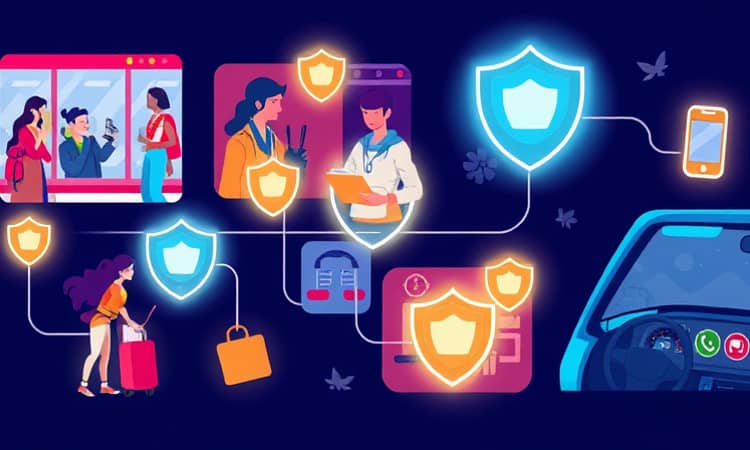
In a world where transactions happen in an instant, the concept of insurance must evolve alongside consumer expectations. No longer can coverage exist as a standalone purchase that lingers in paperwork and phone calls. Embedded insurance weaves protection into the very fabric of our daily interactions, delivering peace of mind exactly when it is needed.
Definition and Core Concept
Embedded insurance integrates coverage into non-insurance services at the moment of need. Instead of visiting broker sites or filling out lengthy forms, customers encounter options seamlessly within familiar platforms. Imagine purchasing a flight ticket and immediately seeing an offer that covers baggage loss, or finalizing a car loan and activating collision protection without leaving the lender’s app. This approach makes insurance a natural companion to each transaction.
The key lies in leveraging digital infrastructure—APIs, real-time underwriting, and dynamic pricing—to enable instant activation without friction. By embedding coverage at the point of sale, providers can offer personalized coverage tailored to each individual based on data like purchase history, lifestyle patterns, or geolocation. This contextual model transforms a once cumbersome process into an intuitive part of the user journey.
Ultimately, embedded insurance is about bringing protection into the mainstream. It shifts the paradigm from voluntary, post-purchase decisions to proactive, integrated solutions that customers appreciate for their simplicity and relevance.
Market Growth and Projections
The global embedded insurance market is experiencing explosive growth, fueled by digital transformation and rising consumer demand. Analysts forecast that the market, valued near USD 145 billion in 2025, could exceed USD 2 trillion by 2035 at an exceptional CAGR over 30%. These figures underline the rapid adoption of embedded models across industries, from automotive financing to e-commerce platforms.
Regionally, North America currently leads in market size, while the Asia Pacific region emerges as the fastest grower, propelled by mobile penetration and fintech innovations. By 2028, embedded insurance is expected to account for over 30% of all insurance transactions, with online distribution channels dominating more than 70% of the share.
The consistent upward projections reflect a convergence of technology, regulatory support for micro-policies, and partnerships between insurers, technology platforms, and ecommerce giants. As digital ecosystems expand, embedded insurance becomes a vital component of the modern customer experience.
Key Benefits for Customers
- Seamless, contextual experience at the point of sale.
- Elimination of paperwork and separate applications.
- Personalized offers based on real-time data.
- Simplified claims through integrated platforms.
- Enhanced engagement via gamification and rewards.
Customers no longer face the frustration of untimely coverage or forgotten renewal dates. Instead, they receive offers precisely when awareness is highest—booking a trip or financing a car. This timely approach helps close protection gaps, particularly for underinsured segments like rideshare drivers or small business operators.
Benefits for Businesses and Insurers
- New revenue streams from non-traditional markets.
- Lower customer acquisition costs through partnerships.
- Improved retention by offering ongoing value.
- Actionable insights from real-time analytics.
- Competitive differentiation in crowded markets.
For insurers, embedded solutions unlock fresh distribution channels without heavy marketing spends. By harnessing data shared through APIs, carriers can refine underwriting models and adjust pricing dynamically, resulting in more accurate risk assessment and pricing. Businesses, in turn, can enhance loyalty by offering a comprehensive service that includes tailored protection.
Partnerships between fintech firms and carriers exemplify this dynamic. Banks integrate life insurance into checking accounts, while e-commerce sites embed product protection for gadgets. Such alliances deepen customer relationships and contribute to sustainable growth.
Drivers of Growth
- Digital commerce expansion and mobile-first experiences.
- Customer demand for frictionless, omnichannel services.
- Advancements in API infrastructure and real-time underwriting.
- Regulatory momentum supporting micro-insurance models.
- IoT and telematics enabling usage-based offerings.
In particular, the integration of IoT devices—from wearable health trackers to automotive telematics—allows insurers to monitor risk continuously and offer dynamic pricing models. At its core, it enables dynamic, usage-based premium models that respond instantly to behavior. This data-driven approach fosters trust and rewards customers for safe behavior, such as safe driving discounts or health incentives.
Real-World Applications
Embedded insurance manifests across a diverse set of industries:
Automotive Financing: Coverage packaged with loans or leases, with premium financing built into monthly payments.
Travel and Hospitality: Flight and hotel booking platforms offering trip cancellation and medical coverage in seconds.
E-Commerce: Gadget protection plans at checkout, simplifying device repair or replacement.
Rideshare and Delivery: In-app offers for vehicle and livelihood protection, tailored to driver behavior.
Mortgage and Home: Homeowner and title insurance embedded into loan origination processes.
These practical implementations demonstrate how embedded insurance reduces friction, increases adoption, and delivers value across everyday customer interactions.
Challenges and Future Trends
Despite its promise, embedded insurance faces hurdles. Data inconsistencies among partners can hinder seamless integration, and regulatory landscapes vary widely across regions. Achieving deep technical alignment with platform providers demands robust API management and clear data governance frameworks.
Looking ahead, trends include a shift from integrated experiences to fully embedded coverage, where insurance becomes invisible—automatically adapting to customer needs without explicit selection. The rise of usage-based insurance models, driven by IoT and telematics, will further personalize offerings and reward positive behaviors in real time.
Additionally, micro-insurance policies designed for short durations or specific events will gain traction, especially in emerging markets where cost sensitivity is high. Regulatory support for simplified products will enable broader financial inclusion, ensuring that more people can access protection when they need it the most.
Empowering Your Journey with Embedded Insurance
As consumers, businesses, or insurers, embracing embedded insurance means championing simplicity, relevance, and protection. It invites every stakeholder to collaborate in building ecosystems where coverage is not an afterthought but an integral element of every transaction.
For consumers, it translates into peace of mind without breaking stride. For businesses, it opens doors to new growth avenues and deeper customer connections. For insurers, it represents a frontier in innovation—melding risk management with digital excellence.
Embedded insurance is more than a trend; it is a transformative force reshaping protection delivered and experienced. By embedding coverage at the heart of daily transactions, we create a safer, more secure world where the right protection finds you exactly when you need it.