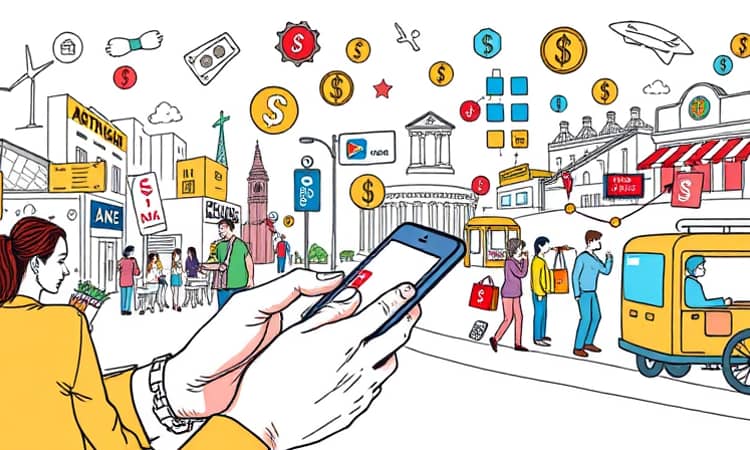
Imagine a world where every financial need is met within the apps and platforms you already love and trust.
This is the reality of embedded finance, a revolutionary model that brings banking services directly to your fingertips.
It transforms everyday interactions by offering seamless access without redirects, making life more convenient and efficient.
What Exactly is Embedded Finance?
Embedded finance integrates financial tools like payments, lending, and insurance into non-financial environments.
Think of it as having a bank branch inside your favorite shopping app or ride-sharing service.
This approach eliminates the need to switch between different applications for money matters.
Key benefits include enhanced user experience and reduced friction in transactions.
- Improved customer loyalty through integrated services.
- New revenue streams from fees and commissions.
- Better financial access for underserved populations.
- Streamlined operations for businesses using APIs.
By embedding finance, companies can offer banking-like services without licenses, relying on fintech partners.
Everyday Applications You Already Use
Embedded finance is not a distant future concept; it is here and thriving in various sectors.
From e-commerce to food delivery, these services are embedded at the point of need.
Let us explore some common examples that highlight its practicality.
- Embedded Payments: In-app options like Apple Pay or digital wallets in Uber and Amazon.
- Embedded Lending: Buy Now, Pay Later solutions from Klarna or merchant financing on Shopify.
- Embedded Banking: Tools like Shopify Balance or Lyft’s in-app checking for drivers.
- Embedded Insurance: Travel insurance offered within booking apps for added convenience.
- Embedded Investing: Micro-investing features in fintech apps to grow savings effortlessly.
These applications demonstrate how financial services become invisible yet essential.
Explosive Growth and Market Projections
The embedded finance market is expanding rapidly, driven by digital adoption and consumer demand.
Projections show significant growth across global regions, with varying estimates based on scope.
Below is a table summarizing key market data to illustrate this trend.
This data underscores the immense potential and rapid adoption across industries.
North America leads with over 33% global share, while Asia-Pacific shows the fastest growth.
In the U.S., transactions are expected to exceed $7 trillion by 2026, highlighting its dominance.
Key Drivers Fueling This Revolution
Several factors contribute to the seamless integration of finance into daily life.
Understanding these drivers can help businesses and users leverage the trend effectively.
- Consumer Expectations: People demand convenience and hate redirects; 70% of SMB payments will be embedded by 2026.
- Business Benefits: Companies diversify revenue and increase customer stickiness with integrated services.
- Technological Enablers: APIs and Banking-as-a-Service platforms simplify backend compliance and risk management.
- Macro Forces: Economic pressures like inflation accelerate B2B liquidity needs, pushing adoption.
- Growth Segments: Lending dominates currently, but insurance and tax services are rising rapidly.
These elements combine to create a perfect storm for innovation in finance.
Challenges and Risks to Navigate
Despite its benefits, embedded finance is not without obstacles that require careful management.
Awareness of these challenges ensures sustainable growth and user trust.
- Risk Models: Lending in volatile economies needs robust underwriting to prevent defaults.
- Compliance Issues: Regulatory handling by BaaS providers must be transparent and reliable.
- Overexposure: Economic downturns could lead to increased vulnerabilities in integrated systems.
Addressing these points helps maintain the integrity of seamless financial ecosystems.
The Future: Limitless Opportunities Ahead
Embedded finance is set to transform the financial landscape by 2030 with global projections reaching $7.2 trillion.
B2B markets alone could quadruple to $15.6 trillion, opening new verticals in retail and services.
Platforms will earn through fees and commissions, emphasizing invisible finance in daily interactions.
For users, this means more personalized and accessible financial tools at their disposal.
Businesses can tap into new revenue streams and enhanced loyalty.
Practical Steps to Embrace Embedded Finance
To make the most of this trend, both individuals and companies can take actionable steps.
Here are some tips to integrate embedded finance into your life or operations.
- For Consumers: Explore apps that offer built-in financial services like BNPL or micro-investing.
- For Small Businesses: Partner with fintech providers to add payment or lending options to your platform.
- For Enterprises: Invest in API integrations to streamline B2B payments and working capital solutions.
- For Developers: Focus on creating user-friendly interfaces that hide complexity behind simplicity.
- For Investors: Look into fintech startups specializing in embedded solutions for growth opportunities.
By adopting these practices, you can harness the power of invisible yet impactful finance.
Embedded finance is not just a trend; it is a fundamental shift in how we interact with money.
It promises a future where financial services are so integrated that they feel like a natural part of life.
Embrace this change to enhance convenience, drive innovation, and build a more connected world.