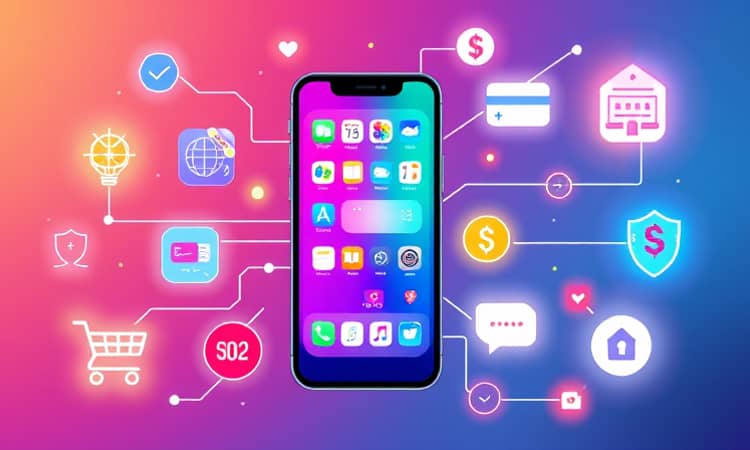
Imagine a world where your favorite apps not only entertain and inform, but also empower you to manage money, secure a loan, and obtain insurance without ever leaving the platform. That world is already here, thanks to the rise of embedded finance. This innovation weaves financial tools directly into non-financial environments, transforming how we shop, commute, and communicate.
By eliminating traditional boundaries between banks and digital services, embedded finance is redefining convenience and unlocking opportunities for businesses and consumers alike. In this article, we explore the concepts, applications, market dynamics, and future outlook of this revolutionary trend.
Redefining Customer Experience
At its heart, embedded finance means integrating financial services directly into non-financial apps where users already spend time. Whether checking out items in an online store, hailing a ride, or chatting with friends, the necessary banking, lending, or insurance functions appear as native features. Users no longer have to switch apps, re-enter information, or endure lengthy approval processes.
This seamless integration leads to unprecedented speed and convenience at checkout. Consumers can split bills with friends, finance purchases, or secure travel insurance in a few taps. The result is a frictionless journey that boosts satisfaction and keeps users engaged longer.
- Instant payments embedded at point of sale
- On-demand lending offers based on user behavior
- Contextual insurance quotes during purchase
- Real-time account balances and transaction alerts
Market Momentum and Future Growth
The embedded finance sector is experiencing explosive growth, driven by consumer demand for convenience and the proliferation of fintech innovation. In 2025, the global market value is estimated at USD 148.38 billion, rising to over USD 197 billion by 2026. Projections for 2030 range from USD 588.49 billion to an astounding USD 7.2 trillion, depending on research methodology.
In the United States alone, embedded finance accounted for nearly USD 2.6 trillion in transactions by 2021, representing 5% of total financial volume. That share is forecast to exceed 10% by 2026, as major platforms integrate banking features into their services.
Key Applications Transforming Industries
Embedded finance today spans five major categories, each reshaping entire industries through tailored financial offerings.
- E-commerce Checkout Enhancements: Online retailers provide in-cart insurance, branded credit cards, and one-click payments.
- Peer-to-Peer Transfers: Social and ride-share apps let users split bills, tip drivers, and reimburse friends instantly.
- Point-of-Sale Financing: Shoppers access installment loans or credit lines without leaving the retailer’s app.
- Embedded Digital Wallets: Customers store funds, generate virtual cards, and make purchases within any platform.
- On-Demand Insurance: Travel, product, and event coverage appear at the moment of need, reducing paperwork and wait times.
Technical Innovation Behind the Scenes
The magic of embedded finance relies on robust API infrastructures. These application programming interfaces connect non-financial platforms with banking systems, enabling data exchange for account verification, risk assessment, and transaction execution.
When a consumer at checkout opts for financing, the platform’s API sends encrypted user data—purchase history, behavioral metrics, and proprietary scoring—to a financial service provider. An algorithm evaluates credit risk in seconds, then returns loan terms or payment options directly within the interface. This process exemplifies seamless integration with zero perceptible delay.
Empowering Businesses and Consumers
Embedded finance offers dual advantages for companies and end users. Businesses unlock new revenue streams by charging fees for payment processing, lending services, or insurance premiums. They also enjoy stronger customer loyalty as users remain within their ecosystems.
Consumers gain access to banking tools when and where they need them, experiencing banking tools at customers’ fingertips 24/7 without juggling multiple apps. The integration encourages financial inclusion by offering quick access to loans and accounts, especially for underbanked segments.
- Expanded product offerings and higher conversion rates for merchants
- Improved customer retention through embedded loyalty programs
- Greater transparency and personalized financial solutions for users
- Reduced operational costs and risk management via automated processes
A Glimpse into the Future
As embedded finance matures, expect further convergence of technology and money. Advances in artificial intelligence will refine credit models, offering hyper-customized financing. Blockchain and digital identity solutions promise secure, decentralized financial architectures embedded within everyday tools.
Ultimately, the dream is a digital landscape where financial friction is obsolete. Users will effortlessly move funds, access credit, and insure purchases across every touchpoint in their daily lives. Businesses that embrace this shift will thrive on transformative customer experiences and sustainable growth.
Embedded finance is not merely a fleeting trend—it represents the future of money management. By dissolving the lines between banking and non-financial services, it empowers individuals and organizations to transact, save, borrow, and protect assets in the flow of life. The journey has just begun, and its potential to reshape global commerce and inclusion is boundless.