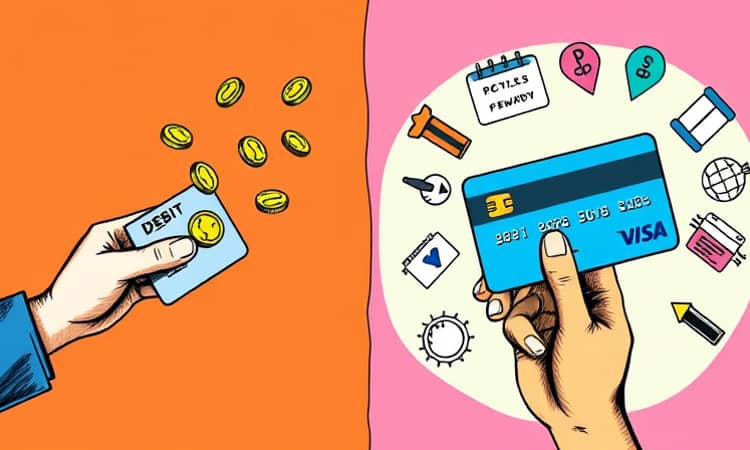
Understanding the nuances of debit and credit card use can empower you to make smart financial choices and avoid common pitfalls.
Core Definitions and Key Differences
Debit cards draw funds directly from your checking or money market account the moment you make a purchase. This means you are spending your own money with no borrowing involved.
Credit cards, on the other hand, offer a revolving line of credit that lets you borrow up to a predetermined limit. You receive a monthly statement and have at least three weeks to pay back the issuer.
Pros and Cons
Choosing between debit and credit depends on your priorities. Below is a breakdown of each option’s strengths and weaknesses.
Debit Card Pros:
- No debt or interest charges
- Easier budgeting and spending control
- Lower fees overall (e.g., no annual fees, interest)
- Instant transactions and ATM cash access
- No credit check required
Debit Card Cons:
- No credit building potential
- Limited fraud protection; PIN required
- Overdraft fees if balance exceeded
- Fewer rewards and perks
Credit Card Pros:
- Builds credit history over time
- Stronger fraud protection safeguards
- Cash back, points, miles and discounts
- Flexibility for larger or emergency purchases
Credit Card Cons:
- Interest charges (high APR if unpaid)
- Risk of overspending and debt accumulation
- Fees (annual, late payments, cash advances)
- Requires credit approval
Security and Fraud Protection
Both card types use chip technology, real-time alerts, and temporary locks via mobile to protect you. Credit cards generally offer stronger safeguards since charges are not withdrawn immediately.
Monitoring all transactions regularly is crucial for detecting unauthorized activity as soon as possible.
Rewards, Perks, and Access
Debit rewards are modest, often limited to cash back at checkout or ATM fee reimbursements. Credit cards typically offer extensive reward structures including travel insurance, purchase protection, and exclusive discounts.
Consider your spending habits: if you travel or dine out frequently, a rewards credit card may deliver significant value.
When to Use Debit vs. Credit
Deciding which card to use for a transaction can be straightforward if you follow a simple strategy.
- Use debit for basics like groceries and gas to stick to budget
- Withdraw ATM cash with your debit card for fee-free access
- Pay rent or large bills with credit to leverage cash flow
- Charge travel and dining expenses to earn rewards
- Avoid incurring interest by paying your credit balance in full
- Keep a secured card if you need to build credit
Combining both options into a hybrid approach can maximize benefits while minimizing costs. Track your spending to avoid surprises and maintain control.
Fees and Costs Breakdown
Debit cards come with minimal fees beyond overdraft and out-of-network ATM charges. Credit cards impose interest rates (often 21% APR or higher), late payment fees, and annual charges. However, generous sign-up offers and reward redemptions can offset these costs.
Additional Considerations
Contactless payment options and mobile wallets are available for both card types, increasing convenience and speed at checkout. Always verify network access and associated fees when traveling.
For younger users or those new to credit, secured credit cards provide a pathway to build a positive payment history.
Conclusion
By understanding the unique advantages of each card type and applying a balanced financial strategy, you can optimize your spending, strengthen your credit profile, and stay in control of your money.
Regularly reviewing fees, reward programs, and statement details will ensure you’re always making choices that align with your financial goals and lifestyle.