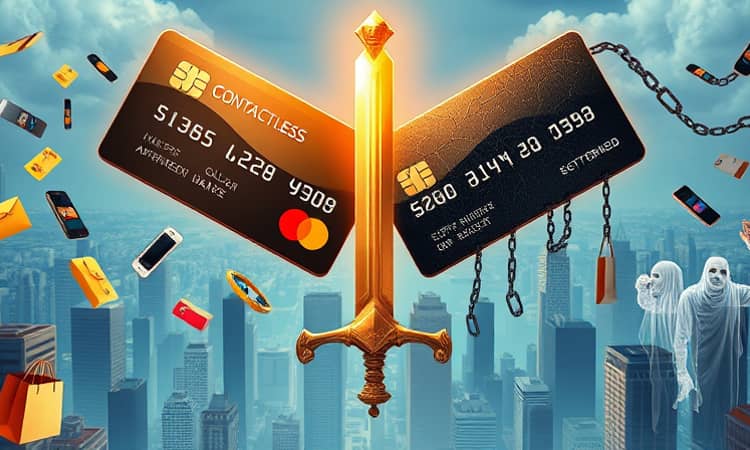
In today’s digital economy, credit cards have become the undisputed workhorse of consumer payments. From grocery runs to international travel bookings, the convenience factor embedded in every swipe, tap, or online checkout is undeniable. Yet beneath the sleek surface of frictionless transactions lies a complex tapestry of benefits and risks, affecting individuals, businesses, and financial institutions alike.
This article delves into how credit cards evolved into an indispensable tool, the concrete advantages they offer, the hidden pitfalls they conceal, and how emerging technologies sharpen both edges of this financial weapon. You’ll gain practical strategies to harness benefits while avoiding debt traps.
The Rise of Credit Card Convenience
Since their inception in the mid-20th century, credit cards have surged to penetrate everyday life. As of 2026, about 84% of adult Americans own at least one credit card, and there are over 800 million credit cards in circulation across the United States. The average American juggles 3.9 active credit cards simultaneously, underscoring how central these plastic credentials are to daily spending.
Contactless and mobile payments have further accelerated usage. With contactless payments now making up 50% of transactions globally and digital wallets driving 30% of point-of-sale volume in 2023, speed and simplicity reign supreme. Today, 61% of U.S. consumers tap their phone or card for everyday purchases, valuing the seamless checkout experience over cash or checks.
- Rapid checkouts: Tap-to-pay reduces transaction times by 63% compared to cash.
- Universal acceptance: Nearly half of small businesses worldwide accept credit cards as standard.
- Integrated loyalty: Saving card details within apps powers recurring subscriptions and one-click purchases.
The Hidden Costs of Convenience
Behind every effortless transaction lurks the potential for long-term financial strain. Total U.S. credit card debt topped $1.17 trillion in early 2026, with TransUnion forecasting a climb to $1.18 trillion by year-end—a 2.3% increase. While this growth rate is the smallest since 2013 (excluding 2020), it still signals persistent reliance on borrowed funds for daily expenses.
High interest rates are at the heart of the debt dilemma. With the average APR above 20%, carrying a balance—even a modest one—can quickly compound into a significant financial burden. Approximately 22% of cardholders make only minimum payments fueling long-term interest, trapping them in cycles of debt that can take years to escape.
- Inflation-driven reliance: Middle-income households have increased credit usage by 18% for everyday costs.
- Emergency shock absorber: Medical bills account for 25% of unexpected credit charges.
- Behavioral overspend: Rewards programs can encourage unnecessary purchases to chase points.
Winners and Losers in the Credit Card Ecosystem
The credit card landscape is a finely balanced ecosystem of stakeholders, each with distinct incentives. Consumers enjoy speed, rewards, and fraud protection, while banks and networks profit from interchange fees, interest income, and data analytics. Merchants bear processing costs averaging 1–3% per transaction, which can be passed onto shoppers via higher prices.
Financial technology firms have carved out niches by offering virtual cards, one-click tokenization, and buy-now-pay-later services, capturing 71% year-over-year growth in some segments. Yet the cost of convenience often falls unevenly: affluent users reap travel perks and cashback, while lower-income households pay proportionally more in interest and fees.
Emerging Technologies: Sharpening the Double Edges
New payment innovations amplify both the bright and dark edges of credit card use. Biometric authentication—fingerprint, facial recognition, and voice ID—is now used by 84% of global cardholders, reducing fraud but raising privacy concerns. AI-driven fraud detection systems have expanded by 45%, flagging suspicious patterns in real time.
Mobile wallets account for 32% of online credit transactions, with 70% of consumers saving card details in merchant apps for future use. Virtual cards and single-use numbers add a layer of security, yet the ease of digital checkout can spur impulsive spending. Buy-now-pay-later plans bypass traditional credit checks, attracting younger demographics but potentially creating undisclosed liabilities across multiple platforms.
Navigating the Double-Edged Sword: Practical Strategies
To maximize the advantages of credit cards while minimizing risks, consider these actionable steps:
- Automate full monthly payments: Avoid interest by ensuring your balance is zeroed out each billing cycle.
- Choose low-interest cards: Compare APRs and fees before applying.
- Leverage virtual cards for subscriptions: Reduce the chance of unwanted renewals or data breaches.
- Use expense management apps: Track spending categories in real time to prevent overshoot.
- Set up spending alerts: Receive notifications for large or unusual transactions.
Businesses can optimize operations by adopting automated expense workflows, reducing manual reconciliation time by 30–40%. Meanwhile, merchants may negotiate lower rates or surcharges to balance customer convenience with profitability.
Ultimately, credit cards are neither inherently good nor bad—they are powerful tools that demand respect and discipline. By understanding the underlying mechanics of fees, interest, and reward structures, users can wield them responsibly, turning a potentially perilous instrument into a gateway for building credit, enhancing buying power, and safeguarding against fraud.