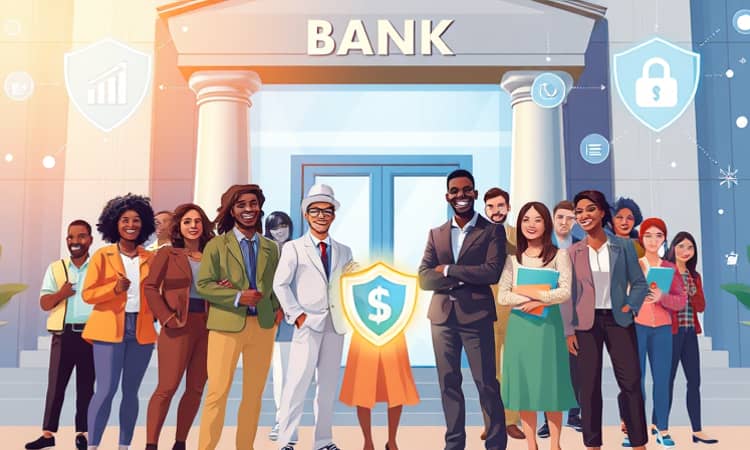
In today’s rapidly shifting financial landscape, data security and integrity stand as the most precious currency for lenders and borrowers alike. For small and midsize businesses (SMBs) navigating tight credit conditions, and for individuals seeking essential funding, trust in a lender’s processes can determine not only approval, but the long-term health of the relationship.
Recent trends show SMB lending rose 7.5% in Q2 2025 despite stricter standards, underscoring resilience when trust is present. Yet, coverage gaps still leave 30% of applications uncovered, highlighting the urgent need for transparent, secure practices that bridge these divides.
Why Trust Matters in Lending
Trust isn’t just an abstract concept; it directly influences profitability, loyalty, and risk mitigation. Studies reveal that 81% of bank customers trust their institutions for data security, compared to only 45% for digital banks and 44% for tech firms. With 62% of customers ready to abandon a lender after a breach, robust security becomes the bedrock of sustainable growth.
Furthermore, open banking initiatives offer compelling opportunities—B2B profitability jumps by 64% and revenue by 63% when handled with full transparency. Consumers are more comfortable sharing information with banks (66%) and credit cards (56%) than with newer fintech entrants, reinforcing that established trust channels remain essential.
Key Strategies to Build Trust
Effective trust-building encompasses multiple dimensions, from cybersecurity to communication. The following list captures core approaches that lenders can adopt:
- EIN validation from IRS records and continuous AI-driven anomaly detection to ensure borrower identity and financial authenticity.
- Real-time loan status updates and clear explanations of decision criteria, rates, and credit impacts to eliminate uncertainty.
- Tailored, data-driven financing solutions driven by payroll integrations, VOE data, and niche market expertise to meet individual needs.
- Strategic open banking partnerships for faster funding, seamless account connectivity, and richer insights into cash flow.
- 24/7 fraud prevention monitoring and automated credit checks to demonstrate ongoing commitment to borrower protection.
- Omnichannel borrower engagement strategy that blends online portals, mobile apps, and dedicated relationship managers for consistent support.
Technology and Transparency
Integrating advanced technology plays a pivotal role in elevating trust. Next-generation scoring models can assess up to 50% more commercial applications by combining traditional and alternative data. However, a remaining 30% gap calls for innovative approaches such as embedded finance and API-driven data sharing.
Open banking, when implemented with transparent disclosures and consent-driven data flows, reassures borrowers. By providing real-time transaction visibility and granular spend analytics, lenders empower customers to understand how decisions are made and how to improve their profiles for future borrowing.
Personalization and Relationship-Building
In an era where 74% of customers crave personalized experiences and 66% welcome data-driven offers, lenders must go beyond one-size-fits-all products. By analyzing payroll and expense data, finance partners can craft custom loan structures that reflect seasonal revenue cycles, growth projections, and repayment capabilities.
Relationship building extends to proactive risk management. Educational resources on fraud prevention, community outreach programs, and regular check-ins through digital or human channels foster a sense of partnership rather than mere transaction.
Overcoming Challenges
Despite best efforts, lenders face persistent obstacles:
- Tightening credit standards that strain SMBs and require deeper manual underwriting.
- Data breach fears: 62% of customers admit they would lose confidence, and 43% would disengage after an incident.
- Economic volatility and coverage gaps, leaving nearly a third of applicants without traditional credit footprints.
- Distrust in nonbank fintechs, with only 37% naming them as most-trusted compared to 33% for banks.
To surmount these barriers, lenders should prioritize continuous security audits, transparent communication plans for breach scenarios, and hybrid underwriting models that blend automation with expert oversight.
Looking Ahead: Sustaining Trust for Tomorrow’s Loans
As we move into 2026 and beyond, the financial ecosystem will be defined by the seamless fusion of technology, human insight, and unwavering integrity. Lenders that embed cybersecurity at every layer, embrace AI responsibly, and maintain open dialogue will not only capture market share but also cultivate loyalty that translates into 25-95% higher profitability through improved retention.
Moreover, as embedded finance reshapes how capital flows through software platforms, banks and fintechs alike must anchor innovation in principles of privacy, fairness, and clarity. Only then will secure loans be more than transactional—they will become the cornerstone of enduring economic growth and shared prosperity.
Ultimately, trust is not a static achievement but a living commitment. By weaving security, transparency, personalization, and relationship-building into every stage of the lending journey, financial institutions can unlock the full potential of SMBs, empower consumers, and redefine what it means to be a truly reliable partner in finance.