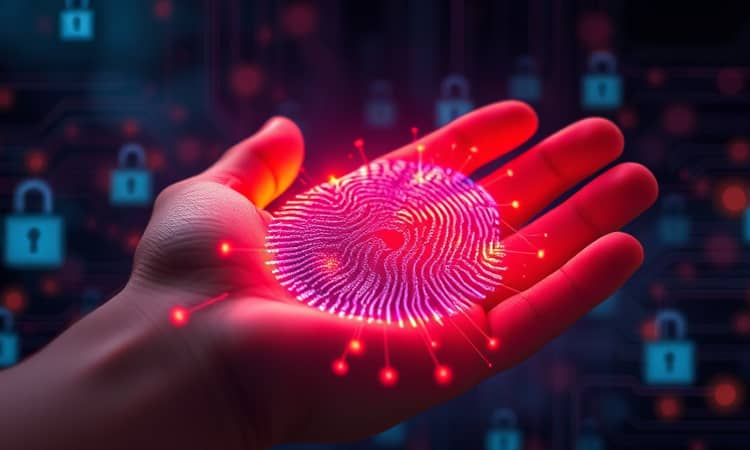
In an era where our most intimate traits become keys to personal data and critical systems, your fingerprint stands as both an invaluable asset and a potential point of exploitation. Treating this unique biometric marker as your personal "fortune" demands understanding, vigilance, and strategic protection.
Understanding Fingerprint Technology
Fingerprint authentication relies on unique ridge and valley patterns found on every individual’s fingertips. These patterns—comprising arches, loops, and whorls—are converted into a digital representation called a template. Instead of storing an actual image, systems extract mathematical templates for secure matching based on minutiae points such as ridge endings and bifurcations.
The capture process takes under a second: a scanner records surface features, software isolates minutiae, and an algorithm compares the result against stored templates. This rapid cycle, often described as rapid millisecond-level verification speed, underpins widespread uses from mobile unlocking to high-security access panels.
The Evolution of Fingerprint Scanning
Originally developed for forensic investigations in the late 19th century, fingerprint analysis evolved into a cornerstone of criminal identification. Over decades, sensors shrank from bulky optical devices to compact modules in smartphones. Today, ubiquitous smartphone integration worldwide has made fingerprint unlocking a default convenience for billions, driving continuous improvements in accuracy, speed, and reliability.
Advances in algorithmic matching and sensor design have reduced error rates to fractions of a percent. Modern systems can distinguish genuine tissue from spoofs using texture and thermal cues, ushering in a new era of biometric confidence.
Key Sensor Technologies Compared
Understanding different sensor types helps organizations choose the right solution for their needs:
Applications Across Industries
- Mobile Devices: Unlocking phones and authorizing payments with a balance of security and convenience.
- Access Control: Securing doors and workstations in corporate and residential buildings.
- Financial Services: Authorizing transactions to reduce fraud and streamline customer experience.
- Law Enforcement: AFIS databases match latent prints for crime solving and identity verification.
- Healthcare and Commercial ID: Patient records access and membership verification in gyms or events.
Benefits and Risks: Striking a Balance
Fingerprint systems offer undeniable advantages: they are hard to guess or transfer, reduce password fatigue, and integrate seamlessly into existing frameworks. Many organizations adopt biometrics to templates stored on secure devices, eliminating the risk of intercepted credentials in transit.
However, threats persist. Research indicates an 80% success rate spoofing fingerprints using 3D-printed molds cast in silicon or fabric glue. Criminals craft replicas or exploit software weaknesses—particularly on devices using partial algorithms—leading to impersonation or unauthorized access. In extreme cases, deepfake technology has even recreated synthetic fingerprints derived from high-resolution images.
Risk Mitigation Strategies
To fortify biometric defenses, stakeholders deploy multiple countermeasures. Liveness detection and artificial intelligence algorithms analyze pulse, sweat pores, and thermal signatures to distinguish living tissue from replicas. Combining fingerprint scans with multi-factor authentication combining biometrics—such as PINs or facial recognition—dramatically lowers spoof success.
Emerging contactless and multi-spectral imaging technologies capture sub-dermal data, making it exponentially harder for attackers to reproduce valid prints. Regular software updates, secure enclave storage, and rigorous penetration testing round out a layered security posture.
The Future of Fingerprint Security
Looking ahead, fingerprint biometrics will merge with other modalities—iris scans, voice recognition, and behavioral analysis—to form holistic identity platforms. Devices will leverage behavioral and physiological biometric modalities simultaneously, offering seamless authentication without explicit user steps.
Privacy-conscious innovations will emphasize non-reverse-engineerable encrypted biometric keys, ensuring templates remain indecipherable even if databases are compromised. On-device matching, governed by stringent regulations like BIPA and GDPR, reduces liability and aligns with ethical data-handling practices.
Your fingerprint is more than a credential—it is a dynamic asset that reflects your identity, underpins trust, and secures access in a digital-first world. By embracing robust sensor technologies, layered defenses, and privacy standards, individuals and organizations can protect this invaluable "fortune" against evolving threats. Stay informed, stay vigilant, and treat your fingerprint as the treasure it truly is.