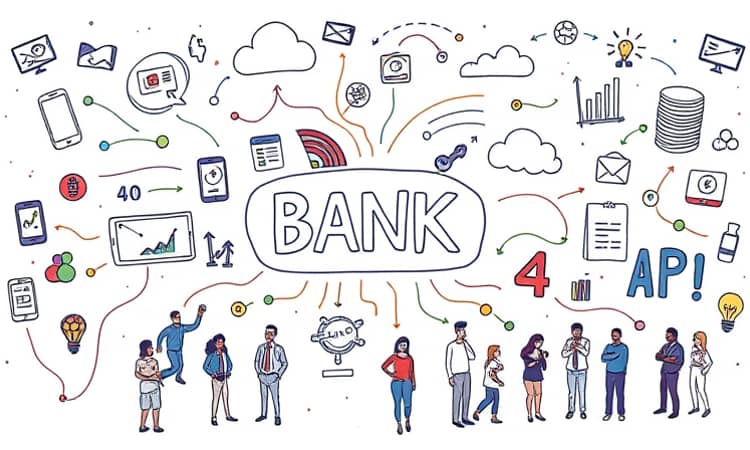
In a world where speed, innovation, and collaboration define success, banking institutions are embracing API-first strategies to stay competitive and relevant. This article explores how APIs become the foundation of modern financial services, driving agility, security, and customer delight.
Understanding the API-First Banking Revolution
Traditional banks often retrofit digital capabilities onto legacy systems, resulting in fragmented interfaces and slow improvements. In contrast, API-first banking treats Application Programming Interfaces as core products, designing every service around modular, reusable APIs from day one.
By prioritizing modular, interoperable, and developer-friendly services, financial institutions can decouple layers such as payments, account management, credit scoring, and investments. This decoupling enables seamless integration with third-party platforms, fintechs, and internal teams working in parallel.
Key Benefits Driving Transformation
This comprehensive approach delivers built-in protocols reduce vulnerabilities while empowering banks to iterate quickly and respond to market demands. By embedding standardized security at platform level, institutions minimize compliance risk and foster trust.
Empowering Innovation and Collaboration
API-first banking powers the transition from open banking to full open finance by providing the infrastructure for secure data sharing, consumer consent, and seamless interoperability. Standards like PSD2 in Europe and UPI in India exemplify how regulatory frameworks can catalyze innovation.
Through Banking-as-a-Service (BaaS), banks can digitize core offerings and embed FDIC-insured accounts into non-financial apps. This allows retailers, gig platforms, and software providers to integrate financial services directly, creating tailored, omnichannel, and embedded services that engage customers where they already spend their time.
Real-World Use Cases Shaping Tomorrow
- Neobanks built entirely on APIs, offering scalable and secure digital-first banking accounts.
- Gig economy platforms issuing instant payouts, escrow services, and wallet settlements without middleware.
- Fintechs delivering customized lending, subscription billing, and digital wallets without holding banking licenses.
- Enterprise ERP systems integrating treasury and multi-bank dashboards for real-time financial reporting.
- E-commerce and ISV software embedding payments and account management directly within checkout flows.
These examples underscore how embedded finance is everywhere, turning every app into a potential banking interface and every transaction into an opportunity for innovation.
Overcoming Challenges and Accelerating Adoption
Migrating from legacy core banking systems can pose significant integration bottlenecks. An API-first approach addresses this through modular growth, API mocking for agile testing, and adherence to open banking standards for consistent interoperability.
Establishing an API-first culture from the top requires executive alignment, clear roadmaps, and identifying organizational obstacles. Leadership must prioritize API products early, define security and governance at the platform level, and empower cross-functional teams to collaborate effectively.
The Future Landscape of Financial Services
As the financial services sector embraces platform thinking, we will see the rise of super-apps that consolidate banking, e-commerce, and social interactions. Artificial intelligence will leverage real-time customer data to deliver personalized advisory services, while new credit models extend lending to underserved populations, driving financial inclusion.
Traditional banks that retrofit APIs may struggle to keep pace with neobanks that natively adopt API-first designs. Those that succeed will be the ones bridging business strategy with technical execution, unlocking new revenue streams and reshaping customer relationships.
Getting Started with API-First Banking
- Begin with a clear API strategy aligned to business goals and customer needs.
- Develop a modular architecture and mock APIs to enable parallel development and faster testing cycles.
- Embed security, encryption, and consent management at the platform level from the outset.
- Foster cross-functional collaboration by providing developer-friendly documentation and sandbox environments.
- Iterate on discrete API products, measure KPIs, and scale successful modules across the organization.
Conclusion
API-first banking is more than a technological upgrade—it represents a mindset shift toward continuous innovation and collaboration. By treating APIs as strategic assets, financial institutions can accelerate their digital journeys, deliver extraordinary customer experiences, and unlock new business models.
The future belongs to banks that adopt an API-first culture, transform legacy systems into agile platforms, and embrace the endless possibilities of embedded finance. Start today, iterate quickly, and watch as your institution becomes the architect of tomorrow’s financial ecosystem.